

Breathe in. What did you just inhale? Mostly invisible and often unnoticed, Volatile Organic Compounds (VOCs) are harmful particles present in our homes at levels 2-5 times higher than outdoors. They lurk in your paint, cleaning supplies, and even your new furniture, posing potential health risks from eye irritation to nervous system damage.
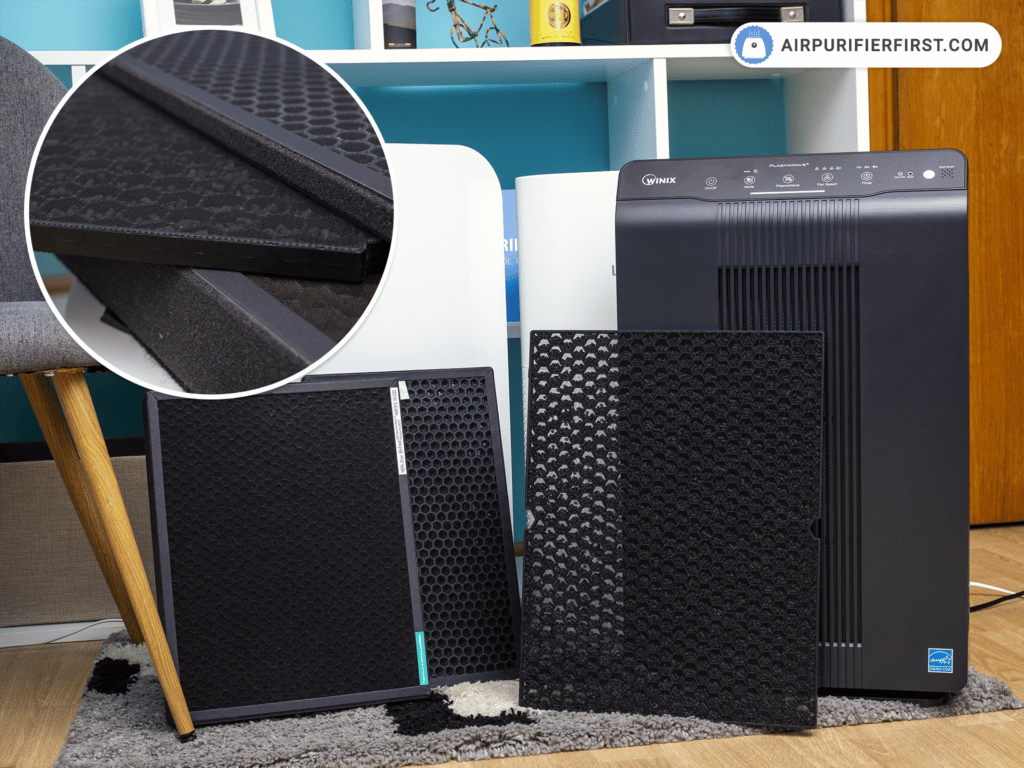
Table of Contents
One of the most effective solutions to combat VOCs would be buying an air purifier, not just any air purifier, but one with the best possible features and filtering technology to adsorb VOCs. Such an air purifier should have the best possible carbon filter (ideally a pellet-based), which needs to be as large as possible, and I will go into all this in more detail in this article.
Before I get down to business, it is important to remember that high concentrations of VOCs can irritate the eyes, nose, and throat and can harm the nervous system and the whole body altogether. Therefore, this is a potential problem that needs to be addressed and educated. However, in addition to using an air purifier, I would definitely suggest ventilating the room as much as possible, especially when cleaning the household with chemicals, which are a major source of VOCs.
Through rigorous market analysis, extensive testing, and comprehensive reviews of filtration technologies, I’ve created a list of the top 5 air purifiers to help you fight VOCs.
In addition, I have answered the most frequently asked questions on the subject and, certainly, the questions that I get from time to time from readers. I, therefore, suggest that you don’t skip any sections in the article, as I am sure you will find answers to the questions that have been troubling you, and you will very likely learn something new.
Here’s a Summary of The 5 Best Air Purifiers For VOCs!
- Winix 5500-2 – It is the best cheap air purifier for VOCs. It uses a carbon pellet-based filter that is washable, which means you can freshen it up from time to time. This air purifier is designed for rooms up to 360 sq. ft.
- IQAir GC MultiGas – Premium air purifier with the most advanced filtration technology. The filters on this unit capture 100 times smaller particles than traditional filters. Uses an activated carbon filter with as much as 12lb of carbon. Ideal for rooms up to 473 sq. ft.
- Austin Air Healthmate – This USA-made air purifier covers spaces up to 400 sq. ft. and uses 4-stage filtration technology. It uses a combination of carbon and zeolite filters weighing over 15 lb. to effectively combat VOCs.
- Alen FLEX – It is a modern air purifier, excellent value for money, containing 2 lb+ of carbon in the filter. Ideal for rooms up to 300 sq. ft., it uses a high-quality True HEPA filter and is one of the more reliable air purifiers on the market.
- Airpura F600 – Covers the largest rooms of all the units on the list, up to 884 sq. ft. It uses three-stage filtration technology and has a carbon filter that weighs as much as 18lb. An ideal choice for high VOC concentrations.
*If you click any of these links and make a purchase, we earn a commission at no additional cost to you.
Top 5 Air Purifiers For VOCs
I’ve compiled this list of the best air purifiers for VOCs by trying to strike a balance between price and quality, so you’ll find some of the more affordable devices on the list that are also effective at removing VOCs. However, I have focused on air purifiers that have as much activated carbon in them as possible, and if they have an additive such as zeolite, that is just an added benefit.
Many very popular air purifiers use extremely high-quality HEPA filters, which are excellent at removing small particles from the air, but unfortunately, they do not have high-quality carbon filters. This is also the reason why higher-carbon devices are initially much more expensive. In fact, below, I will show you the top 5 air purifiers that are certified to remove VOC particles from the air.
Winix 5500-2 – The Best Value for Money
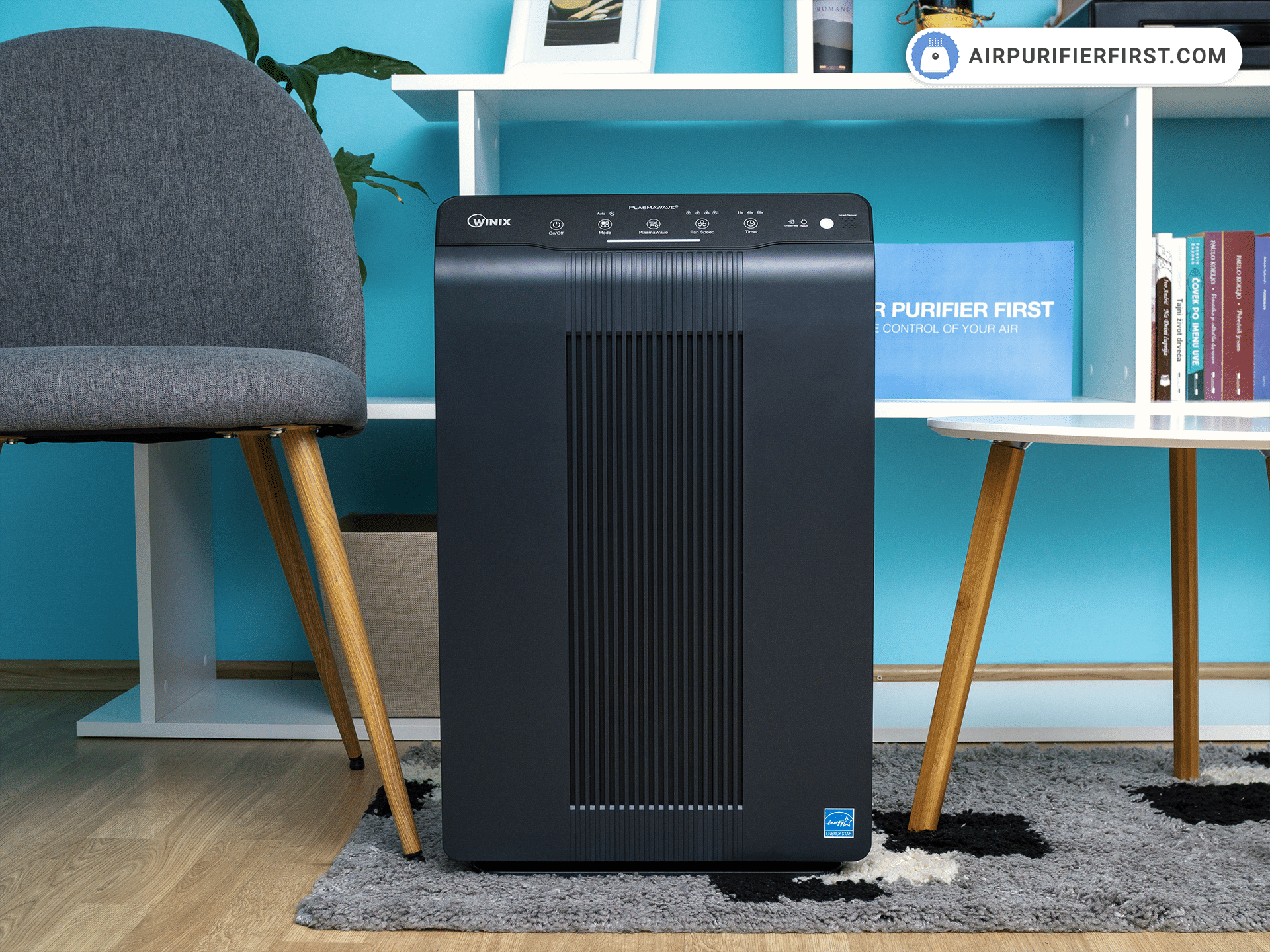
Winix 5500-2 Highlights
- The Winix 5500-2 is designed for rooms up to 360 sq. ft.
- It uses a three-stage filtration technology, the most important of which is a pellet-based activated carbon filter for VOCs.
- Winix has many advanced options, uses an air quality sensor that detects odors in real-time, and many other options that increase the value of this device.
- This air purifier comes with a 2-year warranty.
The Winix 5500-2 is one of the best air purifiers I have had the opportunity to test so far. This air purifier covers rooms up to 360 sq. ft., uses three-stage filtration technology, and has some advanced options that are very useful in everyday use. The first stage of filtration is a pre-filter, the second is a True HEPA filter, the third stage is an activated carbon filter, and the last stage of filtration is PlasmaWave. The activated carbon filter is the most important for us, as other filters are not effective in removing VOCs.
Although the Winix 5500-2 uses an activated carbon filter with a lower carbon concentration than some of the other devices on the list, I think this device does a perfectly solid job, especially in the average household.
I personally used this air purifier when I was painting my house a while ago, and I have to give it a thumbs up because I didn’t smell the paint at all. In addition, I want to point out that this air purifier will not only help in removing VOCs, especially since it uses a high-quality True HEPA filter that traps other particles in the air, thus further improving the air quality in your home.
Keep in mind that this device is big, and you need to have a good spot for it in the room. Small rooms may have problems with such a big device, so plan carefully.
I’ve also recommended the Winix 5500-2 as one of the best air purifiers for smoking, which is further confirmation that it’s an exceptional quality device that you’ll find hard to go wrong with. All in all, the Winix is my absolute recommendation if you’re looking for a cheap air purifier that fights VOCs.
| Filters | Washable Pre-filter, Washable AOC Carbon Filter, and True HEPA Filter |
| Filters Longevity | up to 12 months |
| Coverage (4.8 ACH) | 360 sq. ft. |
| Power Consumption | 70W |
| Warranty | 2-year |
IQAir GC MultiGas – Premium and The Best Overall
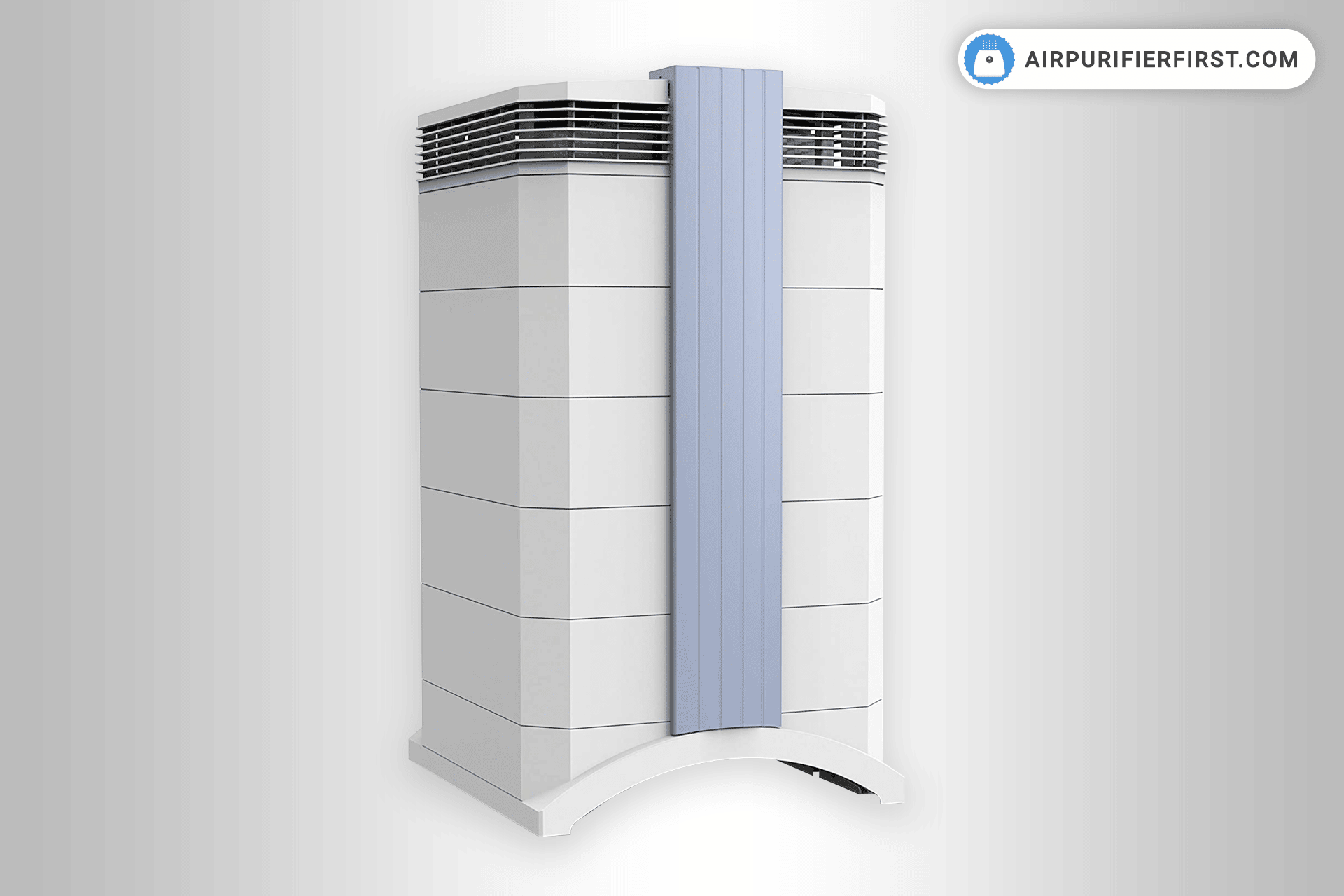
IQAir GC MultiGas Highlights
- The IQAir GC MultiGas is designed for spaces up to 473 sq. ft.
- It uses a three-stage filtration technology that contains as much as 12 lb. of carbon. The more carbon, the more effective the filter is at fighting VOCs.
- Too large, high electricity consumption, and not enough advanced options.
- IQAir gives a very generous warranty on this model for up to 10 years.
IQAir is a goliath in the air purifier market, and this is one device that has perhaps the highest-quality filter technology. Although the high price may be a barrier to purchase, I don’t think you will go wrong with the IQAir GC MultiGas, and this air purifier will clean the air at least a shade better than any other device on the list. This air purifier is best used in a room up to 473 sq. ft. in which it cleans the air 4.8 times in one hour.
The GC MultiGas by IQAir is an air purifier for large rooms with the chemical removal power of more than 100 gas masks. The IQAir HyperHepa filter removes up to 100 times smaller particles than some traditional competing filter systems. Removes particles as small as 0.003 microns. It uses a 3-stage filtration technology consisting of a GC HyperHEPA H11 pre-filter, a set of GC filter cartridges, and a set of GC after-filters. Frankly speaking, this is one of the most efficient filtering technologies currently available on the market.
You can use a MultiGas air purifier in a large room up to 1240 sq. ft., in which it will clean the air 2 times in one hour, and it would still do its job perfectly. This is an enormous air purifier that has lots of power to provide clean air.
IQAir contains a whopping 12lb of carbon in the activated carbon filter, which is quite enough to effectively neutralize VOCs. The IQAir GC MultiGas is definitely the best air purifier you can buy to combat VOCs and one that I am sure you will be happy with for years to come. Not only that, but I would also recommend this air purifier for neutralizing cigarette smoke, wildfire smoke, odors, mold, and similar extremely harmful pollutants.
| Filters | Pre-filter, Gas cartridges, and Post-filter sleeves. |
| Filters Longevity | Pre-Filter: 1 year; Gas cartridges: 2 yrs and 5 months;Post-filter sleeves: 2 yrs & 4 months |
| Coverage (4.8 ACH) | 473 sq. ft. |
| Power Consumption | 215W |
| Warranty | 10-year |
Austin Air HealthMate – Also Great
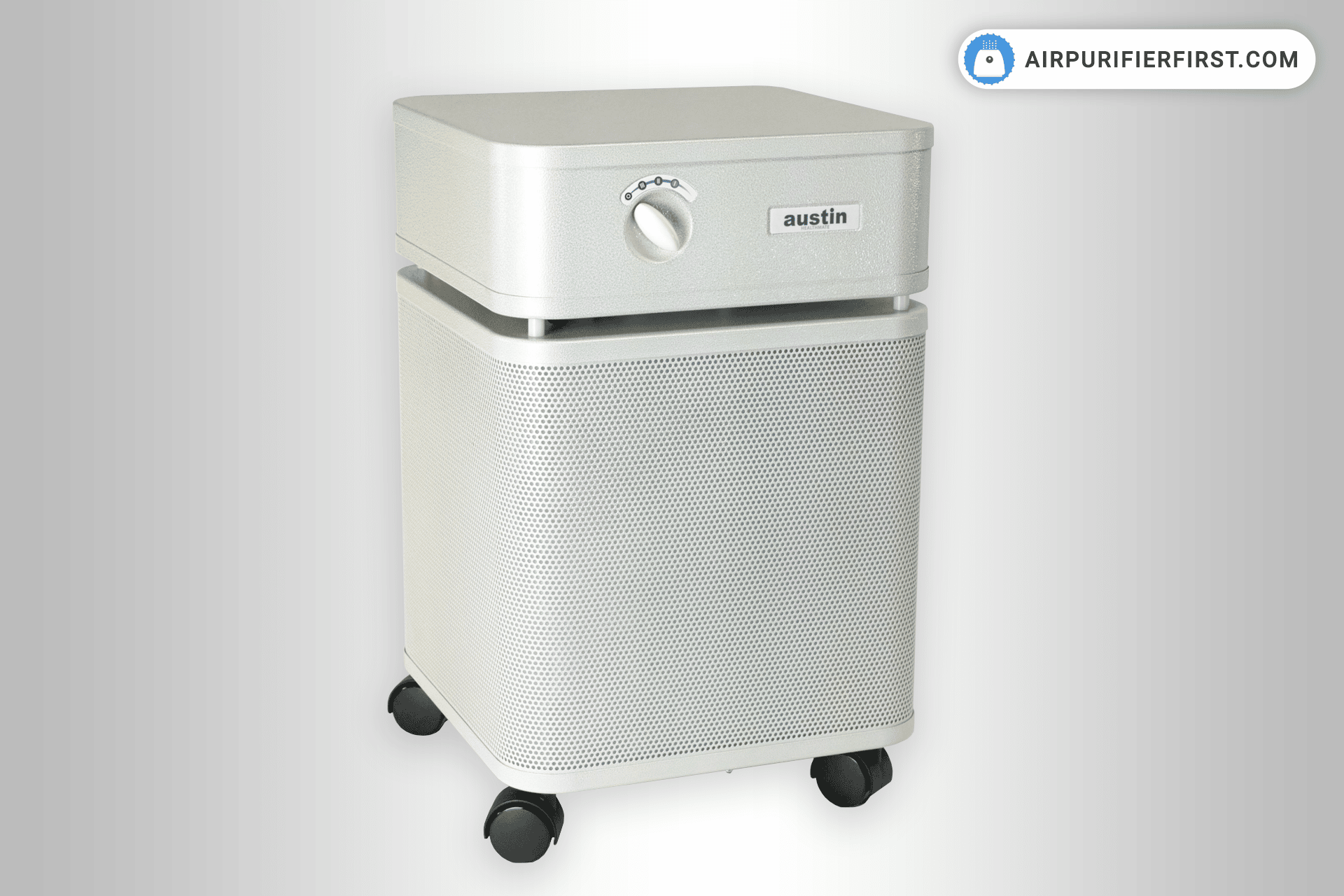
Austin Air HealthMate Highlights
- Austin Air HealthMate is designed for spaces up to 400 sq. ft.
- The Austin HealthMate uses 4-stage filtration technology, of which the combination of carbon and zeolite filters is the most important filtration stage for combating VOCs.
- Although it uses a slightly larger motor, as much as 147W, this air purifier requires a filter change every 5 years, which is still convenient to maintain.
- This air purifier comes with a 5-year warranty.
Austin Air is an air purifier that is made and designed in the USA. This unit covers rooms up to 400 sq. ft. In a room of these dimensions, the device purifies the air as much as 4.8 times in one hour. This air purifier uses 4-stage filtration technology consisting of a large particle pre-filter, a medium particle pre-filter, a combined activated carbon and zeolite filter, and a HEPA filter. It is important to note that the Austin Air HealthMate has a carbon filter that weighs over 15lb, which is why this air purifier made a list and why it is such a good choice to buy.
This air purifier is mounted on wheels, which means you can easily transport it from one room to another. With such a big device, this feature is very useful.
In my opinion, the downside is that this device looks a bit old-fashioned, that it is very minimalistic, and that it has almost no advanced options. In addition, I think that this air purifier uses a little too much energy than the standard on the market.
The Austin Air Healthmate reduces coughing, wheezing, and sneezing. This is definitely an air purifier I would recommend for VOC removal, mainly because of the excellent combination of carbon and zeolite filters.
| Filters | Particle Pre-filter, Medium Particle Pre-filter, Activated Carbon + Zeolite Combination, and HEPA Filter |
| Filters Longevity | 5 years |
| Coverage (4.8 ACH) | 400 sq. ft. |
| Power Consumption | 147W |
| Warranty | 5-year |
Alen FLEX – Elegant and Efficient
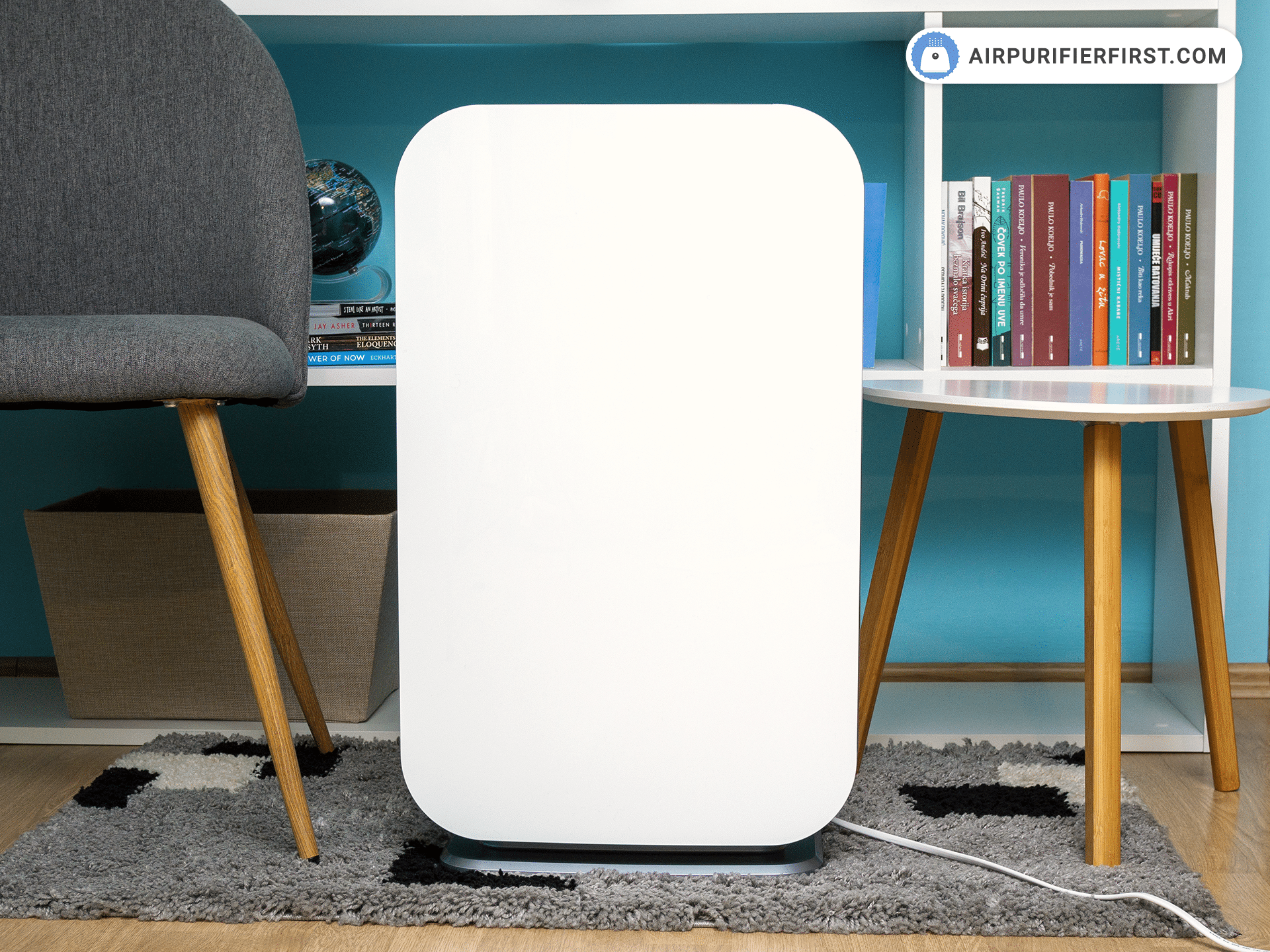
Alen FLEX Highlights
- Alen FLEX covers rooms up to 300 sq. ft.
- This air purifier uses 3-stage filtration technology and has a carbon filter that contains 2 lb+ of carbon.
- In performance tests, this air purifier improved air quality by approximately 94% in a 560 sq. ft. room in just 60 minutes of operation.
- The FLEX is one of the quietest air purifiers I have had the opportunity to test to date.
- Alen has the option to activate a lifetime warranty on this model.
I can safely say that the Alen FLEX is the most modern air purifier on this list. It is the only device that looks stylish and that I can say follows today’s design trends. But since the design is not everything, and it is perhaps the least important thing, I have to say that the Alen FLEX is not only modern but also very efficient and very effective. It uses a 3-stage filtration technology consisting of a pre-filter, a True HEPA filter, and an activated carbon filter. The activated carbon filter in this air purifier contains 2lb+ of carbon.
What I would point out as a drawback when it comes to the FLEX is that there are no advanced options, no smart app, and no air quality sensor. Despite this, it scored fantastic results in performance tests, it runs very quietly and is easy to maintain.
The Alen FLEX is a modern version of an air purifier that uses a carbon filter that is of sufficient quality to handle VOCs.
Although Alen FLEX has some drawbacks, like no fancy features and options, I would still recommend this device to anyone who wants to remove VOCs, odors, and smoke from their homes.
| Filters | Pre-filter, True HEPA Filter and Activated Carbon Filter |
| Filters Longevity | 9-12 months |
| Coverage (4.8 ACH) | 300 sq. ft. |
| Power Consumption | 50W |
| Warranty | Lifetime |
Airpura F600 – The Heaviest Carbon Filter
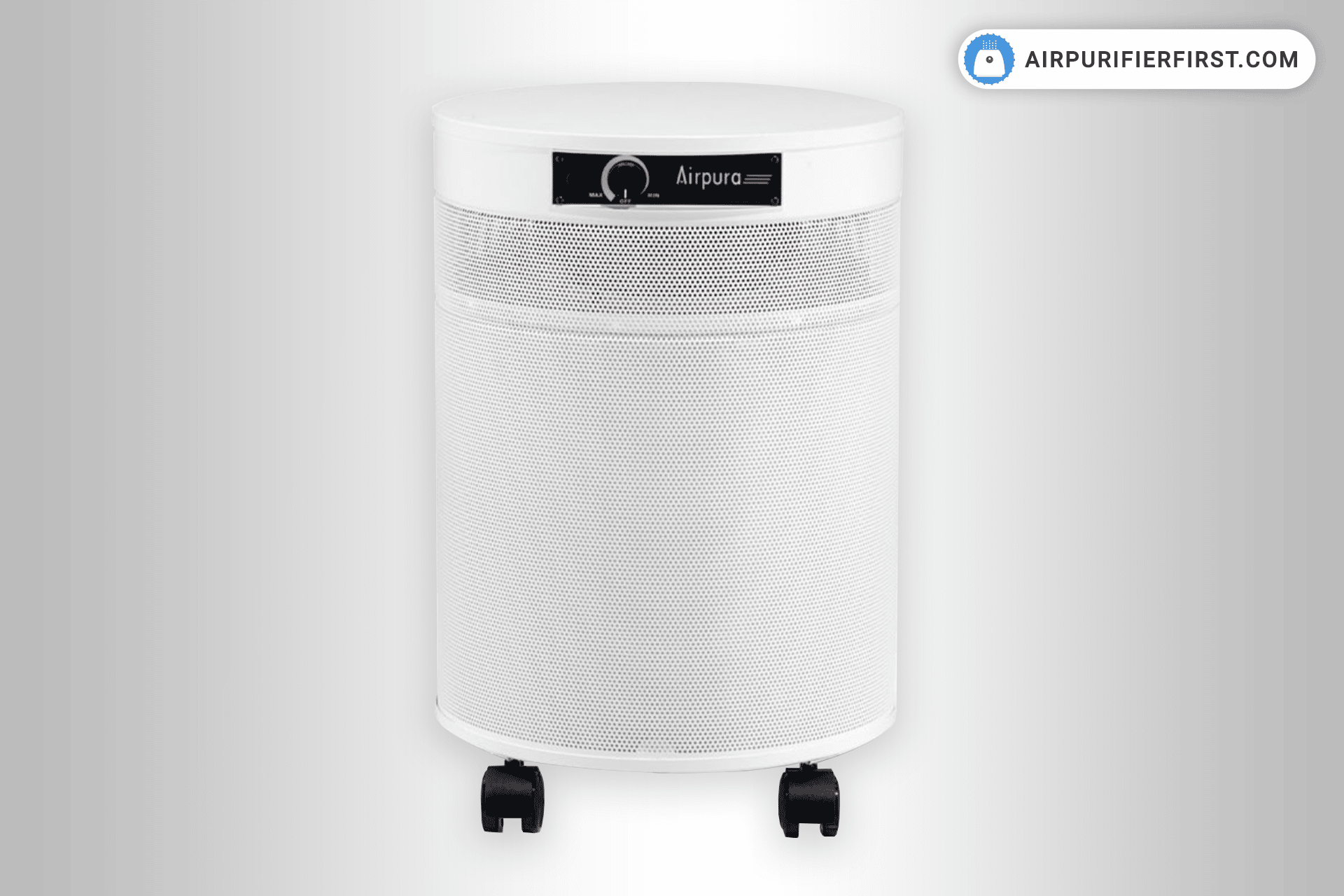
Airpura F600 Highlights
- The Airpura F600 is designed for large spaces up to an incredible 884 sq. ft.
- It uses a 3-stage filtration technology consisting of a pre-filter, True HEPA filter, and activated carbon filter. The Airpura has a carbon filter that weighs as much as 18lb.
- This air purifier is stylistically reminiscent of an old machine, but under the surface lies a dangerous and efficient machine.
- Airpura gives a generous warranty of up to 5 years.
The Airpura is the only air purifier on this list that is made in Canada. What is distinctive about this model, and why I put it on the list, is that it has the largest carbon filter of all the units featured. The Airpura F600 has a carbon filter that weighs a whopping 18lb. It removes 99% of formaldehyde along with VOCs released from common household products, renovation and construction materials, pressed wood products, and pesticides. Specially blended carbon mixtures are available to address specific chemicals.
Airpura F600 is designed for spaces up to 884 sq. ft. In such a large space, the unit cleans the air 4.8 times in one hour, which is the industry standard. This air purifier uses a 3-stage filtration technology consisting of a pre-filter, True HEPA filter, and activated carbon filter. I was impressed that the carbon filter on this unit lasts for as long as two years, while the True HEPA filter needs to be replaced on average between 3-5 years.
Airpura also has wheels like the previously mentioned Austin Air, but this device is round in shape, so if you like a rounded device instead of a squared one, then pick these. Overall I could say that both devices are kind of made in a retro style.
The Airpura F600 is basically a minimalist air purifier equipped with extremely high-quality filtration technology that removes VOCs and similar pollutants.
| Filters | Pre-filter, True HEPA Filter and Activated Carbon Filter |
| Filters Longevity | True HEPA about 3-5 years, and the Activated Carbon about every 2 years |
| Coverage (4.8 ACH) | 884 sq. ft. |
| Power Consumption | 120W |
| Warranty | 5-year |
How Can an Air Purifier Remove VOCs?
The biggest dilemma is whether air purifiers can remove VOCs from the air at all and whether it is worth buying an air purifier for this purpose. This doubt is correct, especially considering that not every air purifier can remove everything.
VOCs are a very serious problem, and I would never recommend buying air purifiers for this reason. To this end, the device must be up to the task, have the appropriate filtration technology, and be efficient. In fact, the most effective filters for neutralizing VOCs are those that can adsorb VOCs, and such filters are activated carbon filters.
Filtration Technologies and VOC Efficiency
HEPA Filters
Air purifiers used for household, non-industrial, and most accessible to almost every ordinary user usually have some kind of HEPA filter as a filter layer. HEPA filters are excellent, especially True HEPA filters, which remove 99.97% of airborne particles down to 0.3 microns in size.
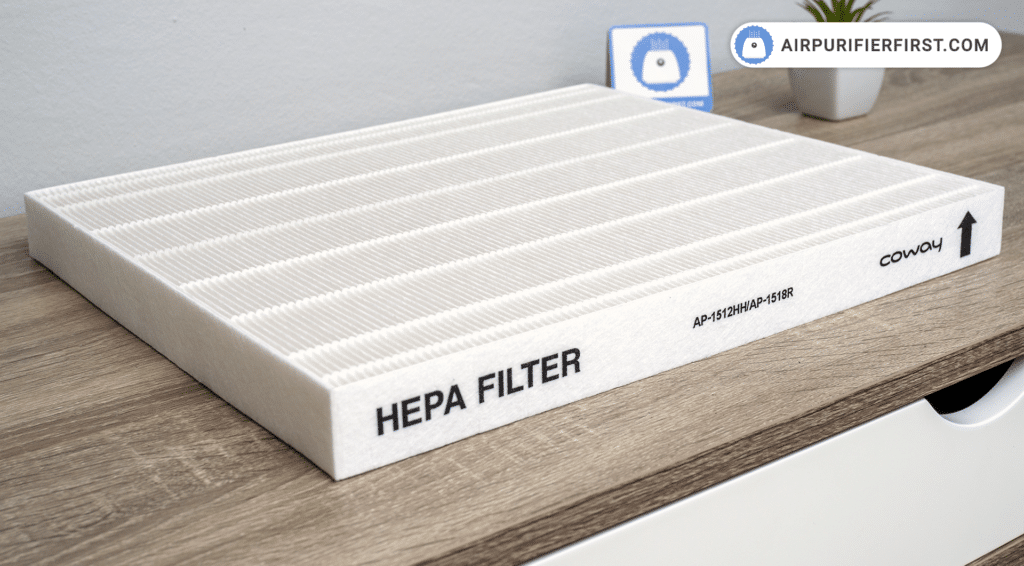
These filters are great for catching small, and large particles such as dust, pollen, pet hair, and similar pollution but are completely ineffective for VOCs, as these particles are almost 1000 times smaller than the particles that a HEPA filter can catch.
A HEPA filter is basically made up of paper or fibers that do not allow particles of a certain size to pass through and so clean the air. In fact, there is nothing in this type of filter that traps VOCs.
Ionizer
Ionizing filtration technology is also very common in many air purifiers. However, this technology is also not effective in removing VOCs.
Basically, the ionizer produces negative ions that bind to heavier particles in the air and then drop them to the ground, and then in combination with some other filtration technologies, neutralize these particles. This means that the ionizer does not destroy particles at all, nor does it bind to VOCs, so this technology is not effective enough even for VOCs.
UV-C Lights
UV-C light is perhaps the most effective way of removing VOCs of all the methods mentioned so far. This is because UV-C light does not adsorb or trap but destroys particles, namely mold, mites, VOCs, and similar stuff. This means that, in theory, UV-C light can destroy VOCs. In addition, this filtration technology is known to destroy some bacteria and viruses.
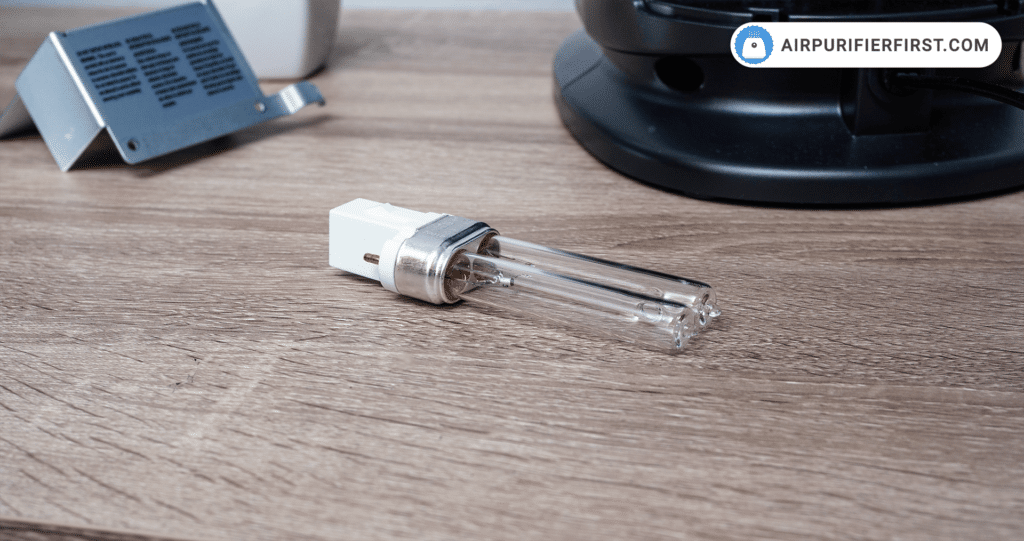
However, there are two problems with UV-C lights in air purifiers:
- The first problem is that UV-C lights in air purifiers are mostly not powerful enough, so they cannot destroy particles effectively enough.
- The second problem is that the air does not stay in the UV-C light for long enough, so it simply does not have time to destroy harmful particles.
Overall, the idea behind UV-C filtration technology is excellent, but I think that more innovation is needed in this area to perfect the technology.
Activated Carbon Filter
As I have already hinted in the previous part of this article, the activated carbon filter is the most effective method for removing VOCs. The point with this filter is quite clear, the bigger/heavier the activated carbon filter, the more effective it will be and the easier it will fight VOCs. The activated carbon filter removes both reactive and non-reactive VOCs.
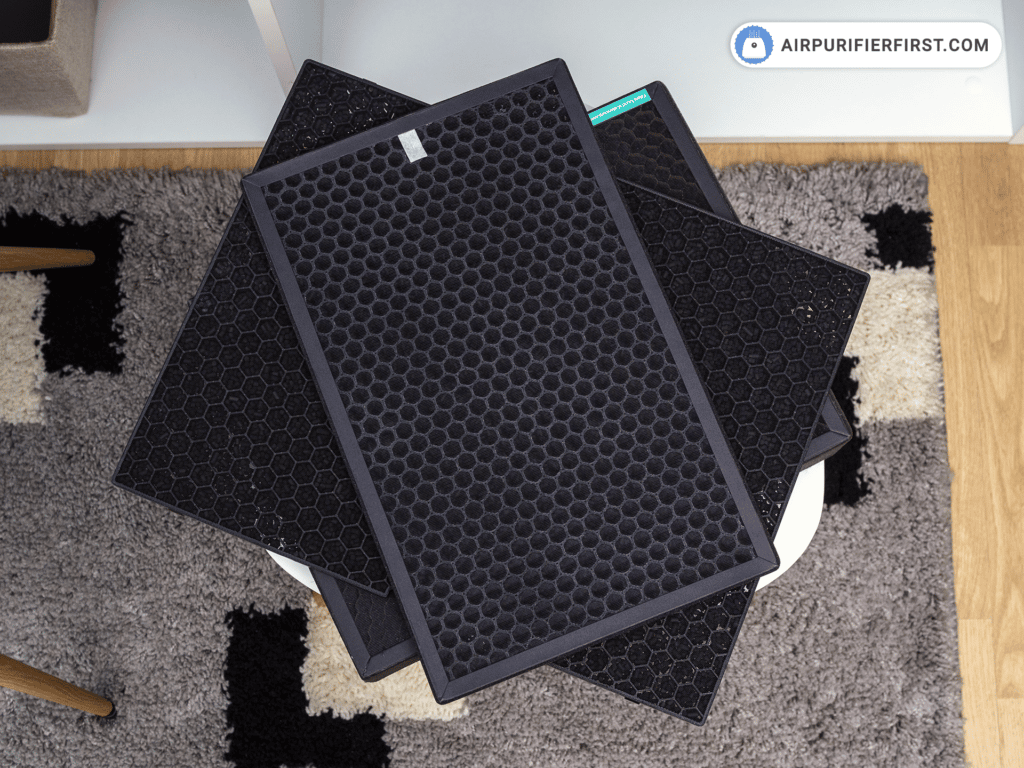
The activated carbon filter works on the principle of adsorption, which is why it is so effective at removing these pollutants, and this filter also removes odors, neutralizes almost all unpleasant smells, and contributes in many ways to keeping the air quality in your home at a high level. However, it is important to bear in mind that even though this filter cannot adsorb all pollutants from the air, it is quite effective enough for domestic situations.
VOCs are a large category, and many gasses, such as benzene and formaldehyde, fall into this category. This basically means that an air purifier with an activated carbon filter will neutralize formaldehyde.
Things to Consider When Choosing an Air Purifier for VOCs
It’s no bad thing to confirm the most important fact, which is that an air purifier that effectively combats VOCs must have an activated carbon filter built in. In addition, there are a few general items that you can look out for when buying or choosing your preferred air purifier.
Filter type: since HEPA filters are not effective in combating VOCs, the air purifier must have an activated carbon filter.
Price: Price is a decisive factor in everything and can have a big influence on the choice. However, this does not always mean that if an air purifier is expensive, it is also good. That’s why I review as many different air purifiers as possible from different manufacturers and in different price ranges, all so that I can give you the best possible suggestions.
Noise level: this is a device you are likely to have on all the time, which means you also need to think about the volume it produces at different speeds. My suggestion is to always choose an air purifier that has as many different speeds as possible, as this will make it easier for you to adjust the mode of operation and help you find the fan speed that suits you best.
Room coverage: It is pointless to buy a weak air purifier because it will not be able to do its job properly or to buy an air purifier that is too strong and will use more resources than necessary. Therefore, before you buy, you should research exactly how large rooms the machine covers and whether it is just the right power you need.
Operating costs: The price of electricity is rising, and air purifiers are electrical appliances, so you need to pay attention to power consumption before choosing an air purifier. That’s also why I do a detailed analysis of the power consumption and profitability of the air purifier at each review.
Filter cost: In addition to the cost of electricity, there is also the cost of replacement filters, which in some air purifiers last more than one year, so it would be a good idea to include this cost in the annual maintenance costs.
FAQ on Air Purifiers for VOCs
Do air purifiers remove VOCs?
The answer to this question is difficult to generalize as it all depends on the filtration technology in the air purifier. Basically, an air purifier that has an activated carbon filter will adsorb VOCs. This means that air purifiers can remove VOCs.
Which air purifier is best for VOCs?
If your budget is limited, then my absolute recommendation is the Winix 5500-2. It is an excellent device with high-quality filtration technology, an affordable price, and many advanced options. If your budget is not limited, then I suggest buying the IQAir GC MultiGas, which is definitely one of the best air purifiers on the market, with filtration technology of such high quality that it easily removes VOCs.
Can HEPA filters remove VOCs?
A HEPA filter removes small particles such as dust, pollen, pet hair, and similar stuff, which are hundreds or even thousands of times larger than VOCs. This means that a HEPA filter cannot remove VOCs.
Do air purifiers remove formaldehyde?
An air purifier with an activated carbon filter will help remove formaldehyde from the air.
Can you get sick from VOCs?
In fact, VOCs are common pollutants that can be found in your home, which means that you will be exposed to these pollutants much more when you are indoors than outdoors. I wouldn’t say that these pollutants can make you sick, but they can irritate your eyes, throat, nose and even trigger asthma. In addition, as you know, inhaling the smell of fresh paint for a long time can cause headaches, eye and nose pain, and it is known that the smell of paint also falls into the category of VOCs.
Final Conclusion
It is encouraging that more and more people are becoming aware of the air they breathe and that indoor air is not ideal and contains many pollutants. In this article, I have touched on VOCs, as well as the best solutions to remove and neutralize these particles.
I have analyzed the market and made a list of the best air purifiers you can buy to combat VOCs, including the harsh gas formaldehyde, and in my opinion, the best choice to buy is the IQAir GC MultiGas. Considering that the IQAir is a top-of-the-range air purifier, the prices are ridiculous, and not all users can afford it; the second best choice that offers the best price/quality ratio is the Winix 5500-2.
In addition to the two mentioned above, you won’t go wrong if you choose any other device from the list, as all the devices on the list have been carefully selected and are there for a reason.
If you have any questions on this topic or if you have any suggestions, I invite you to leave a comment in the comments box below.
Hi Milan,
Love the precision of this article and that you narrowed down great choices.
It looks like the Winix 5500-2 emits small levels of ozone which it not supposed to be healthy.
It’s unclear why this would be since hepa filtration allegedly doesn’t emit ozone but from what I read in some amazon reviews, it seems to emit very low levels which might still cause a problem for some people? Do you know much about this issue?
I would prefer to have no ozone but maybe some hepa filters emit levels that meet Calif safe standards?
thanks
Hi Stacey,
Thank you for your kind comment.
Yes, the Winix 5500-2 emits a small amount of ozone, but this only happens when the PlasmaWave feature is turned on. When it’s off, the device doesn’t produce ozone. It’s also important to note that the device is CARB certified, meaning it complies with the stringent regulations set by California and is safe for use. Please also keep in mind that the PlasmaWave feature is set to on by default, so you will need to manually turn it off each time you turn on the air purifier if you prefer not to use it.
HEPA filters don’t produce ozone. This is because they are made of fibers, making ozone production impossible.
I hope this information is helpful. If you have any more questions, I would be pleased to assist you further!
Great info. Milan!
Was wondering if the Levoit 400S could make this list with one of these filters:
LEVOIT Core 400S Air Purifier Toxin Absorber Replacement Filter, 3-in-1 True HEPA, High-Efficiency Activated Carbon, Core400S-RF-TX (LRF-C401-GUS), 1 Pack, Green
or
LEVOIT Core 400S Air Purifier Smoke Remover Replacement Filter, 4-in-1 True HEPA, High-Efficiency Activated Carbon, Core400S-RF-SR (LRF-C401-BUS), 1 Pack, Blue
Thanks,
DR
Thanks!
I don’t see Levoit stating that these filter options have more carbon pellets than the Original Filter. So, using any of these wouldn’t be significantly different from using the Original Filter.
Anyway, the Levoit Core 400S is an outstanding air purifier that neutralizes smoke, VOCs, and bad odors, and if you really like it, then go for it. I’m sure it won’t disappoint you!
Hi…I found your information very helpful as well as having a better understanding of VOC’s and the safest way to removing them. I am a medical aesthetician which involves the use of applying chemicals peels on my patient’s. For example, active ingredients such as Phenyl and Glycolic
and my treatment room is
about 1000 sq ft. However I do have on the counter a
small “air filter” which was required due to the COVID pandemic but I’ve been looking for a VOC filter and one that is reasonable in the price and the carbon filters also will be safe to use on a daily basis.
Looking forward to hearing from you
Thank you
Hi, thank you for the kind words.
Unfortunately, I still haven’t come across a small and affordable air purifier that has enough activated carbon to combat VOCs effectively. Therefore, I can only suggest any air purifier from the list I created for the purpose of this article.