

I decided to compare the Winix 5500-2 and the Winix C535 air purifier to help potential buyers decide which of these two almost identical products to buy.
Dimensions, motor power, volume, and almost all technical specifications of these two Winix air purifiers are identical. However, users are often in a dilemma as to which product to choose. Winix 5500-2 and Winix C535 (Zero) are products designed for rooms up to 360 sq. ft. Both of them use 4-stage filtration in combination with an ionizer that can be turned off if desired.
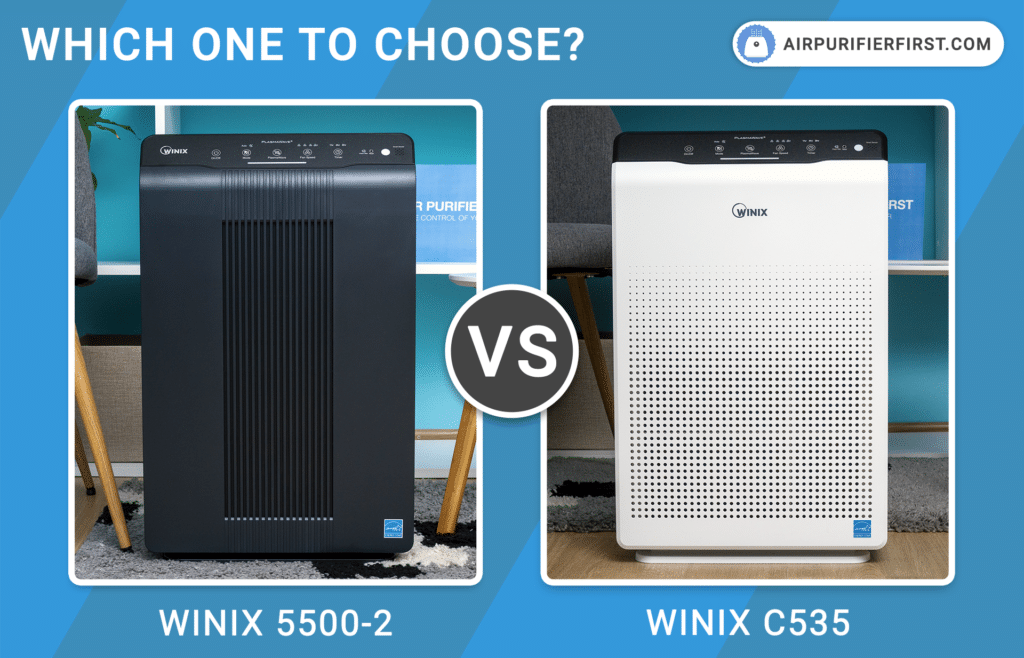
Table of Contents
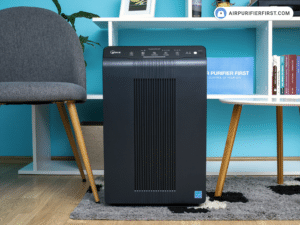
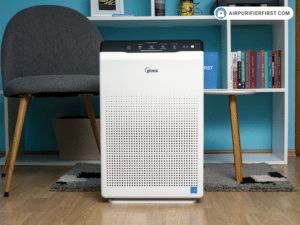
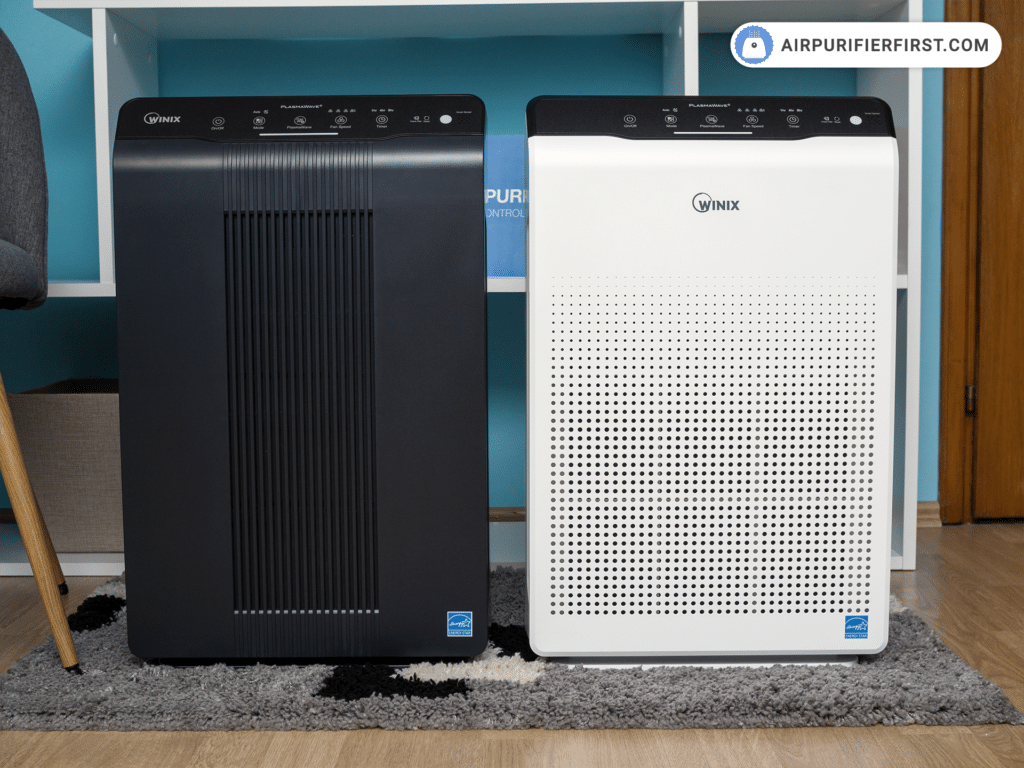
Both devices are very popular and one of the company’s bestsellers. Winix 5500-2 is characterized by entirely black color, while the Winix C535 is white, except for the top panel, which is black. In the following text, I will compare the basic specifications of these two products, list the strengths and weaknesses, and finally declare which device is the better choice in my opinion.
- Winix 5500-2 – is an air purifier intended for rooms up to 360 sq. ft. in size. It uses 4-stage filtration technology consisting of a washable pre-filter, a True HEPA filter, a washable activated carbon filter, and PlasmaWave technology.
- Winix C535 – is an air purifier that covers rooms up to 360 sq. ft. It uses 4-stage filtration, just the same as the Winix 5500-2. The pre-filter is the first stage, then there is a True HEPA filter, a fibrous filter coated with carbon, and PlasmaWave technology.
*If you click any of these links and make a purchase, we earn a commission at no additional cost to you.
Winix 5500-2 Vs Winix C535 Specifications
 |
 |
|
| Manufacturer | Winix | Winix |
| Model | 5500-2 | C535 |
| Dimensions | 15 x 8.2 x 23.6 inches | 15 x 8.2 x 23.6 inches |
| Room Coverage (4.8 ACH) | 360 sq. ft. | 360 sq. ft. |
| Performance Ratings | ||
| Filtration Technology | Washable Pre-filter, Washable AOC Carbon Filter, and True HEPA Filter | Pre-filter, Odor Absorbing Carbon Filter and True HEPA Filter |
| Filter Replacement Indicator | Yes | Yes |
| Filter Longevity | up to 12 months | up to 12 months |
| Power | 70W | 70W |
| Operating Costs Ratings | ||
| Fan Speeds | 5 – Sleep Mode, Speed 1, Speed 2, Speed 3, and Turbo Mode | 5 – Sleep Mode, Speed 1, Speed 2, Speed 3, and Turbo Mode |
| Air Quality Sensor | Yes | Yes |
| Air Quality Indicator | Yes | Yes |
| Auto Mode | Yes | Yes |
| Remote Controller | Yes | Yes |
| Noise Levels | 40.6 – 66.4 dBA | 40.8 – 63.2 dBA |
| Noise Ratings | ||
| Warranty | 2-year | 2-year |
| In-Depth Review | Winix 5500-2 | Winix C535 |
| Price | Check Price on Amazon | Check Price on Amazon |
Features Overview
The Winix 5500-2 and Winix C535 have many standard features, so I won’t dwell on each one individually. More details on both products can be found in the individual reviews I posted here on the airpurifierfirst.com website.
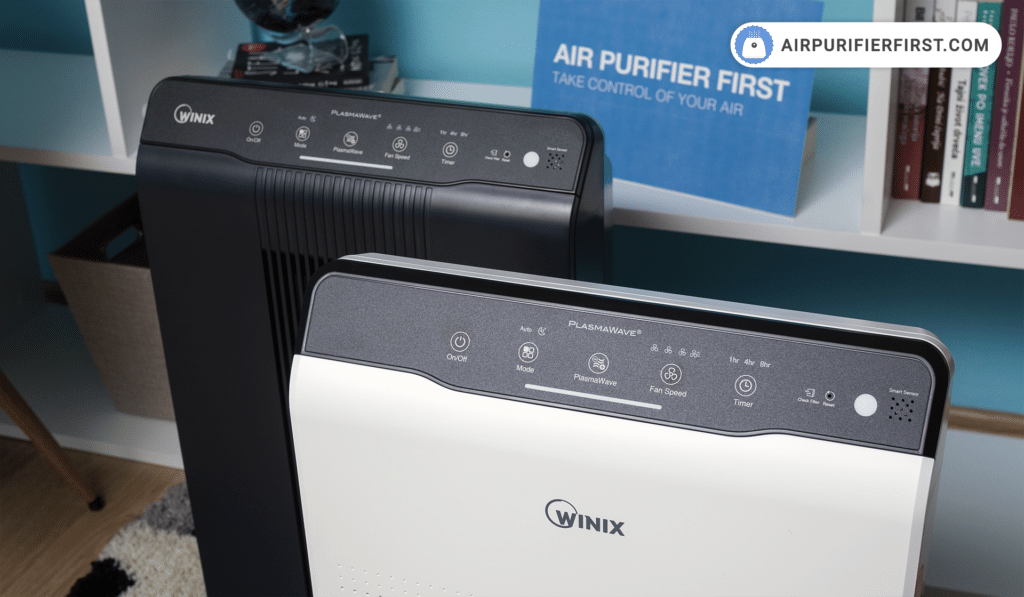
All the options that the Winix 5500-2 has, the Winix C535 also has. Options that characterize these devices are auto mode, sleep mode, 4 fan speeds, timer, smart sensor, air quality indicator, light sensor, and filter reset indicator. I will describe the most critical options in more detail below.
Smart Sensor
The Winix 5500-2 and Winix C535 use a smart sensor that monitors air quality in real time. The smart sensor detects odors and cannot detect dust particles. This means that the sensor will be most useful if you plan to use the air purifier in rooms where you want to neutralize bad odors. The smart sensor is located on the top of the device.
Air Quality Indicator
An air quality indicator is an option that is directly connected to the smart sensor. Based on the smart sensor readings, the air quality indicator will light up a specific color.
Both the Winix C535 and the Winix 5500-2 use an identical indicator. If the indicator is light blue, the room air quality is good. If the amber is lit, the air quality is fair, and if the indicator is red, it means that the room’s air quality is low.
Auto Mode
Auto mode is another option that works in combination with a smart sensor. If auto mode is on, the device will monitor the current air quality and change the fan speed accordingly.
However, there is also a light sensor. So, if it is dark in the room, auto mode will switch to sleep mode.
Filter Reset Indicator
Both devices have a filter reset indicator, which will notify you when it is time to replace the filter. On both devices, it is necessary to change the filters every 12 months on average.
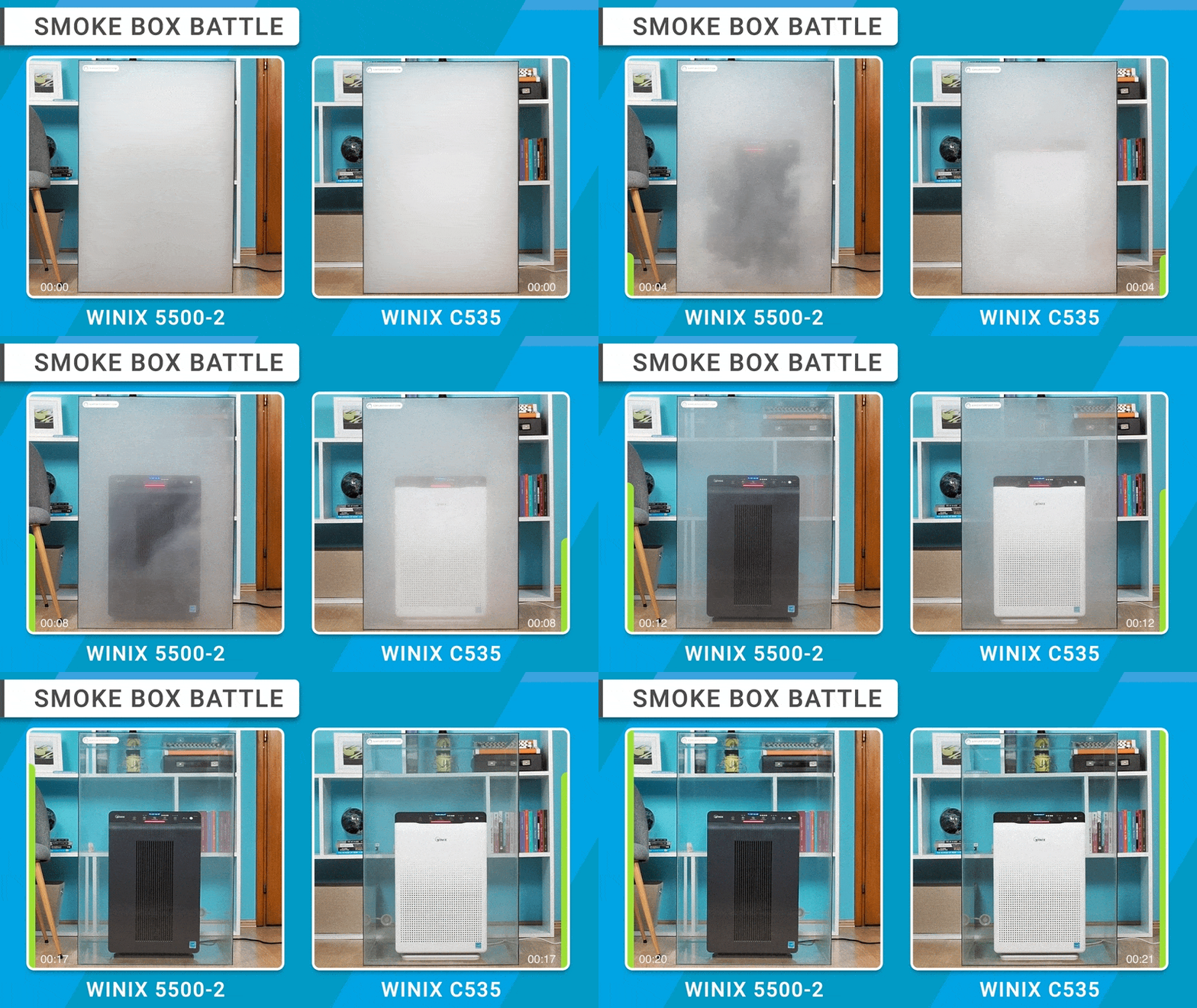
Winix 5500-2 Vs Winix C535 Video Comparison
Filtration Technology
Both devices use 4-stage filtration, which includes PlasmaWave technology. The most significant difference in the filtration system between Winix 5500-2 and Winix C535 is in the filters for neutralizing odors, carbon filters.
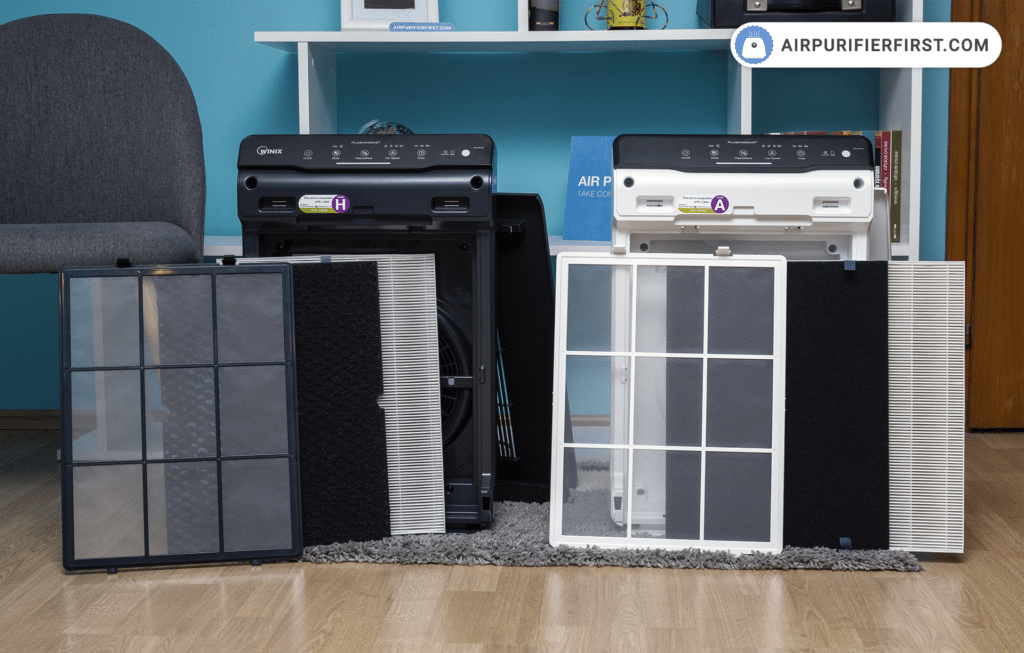
The first stage of filtration in both devices is the pre-filter. The second filtration stage of the Winix 5500-2 is an activated carbon filter with pellets. In contrast, the second filtration stage of the Winix C535 is a fibrous filter coated with carbon.
The third stage of filtration in both devices is the True HEPA filter. The last step of filtration is arbitrary. It is PlasmaWave technology that produces negative ions and thus improves filtration efficiency. The devices are CARB certified, confirming that the devices are safe to use and do not produce ozone in unauthorized quantities.
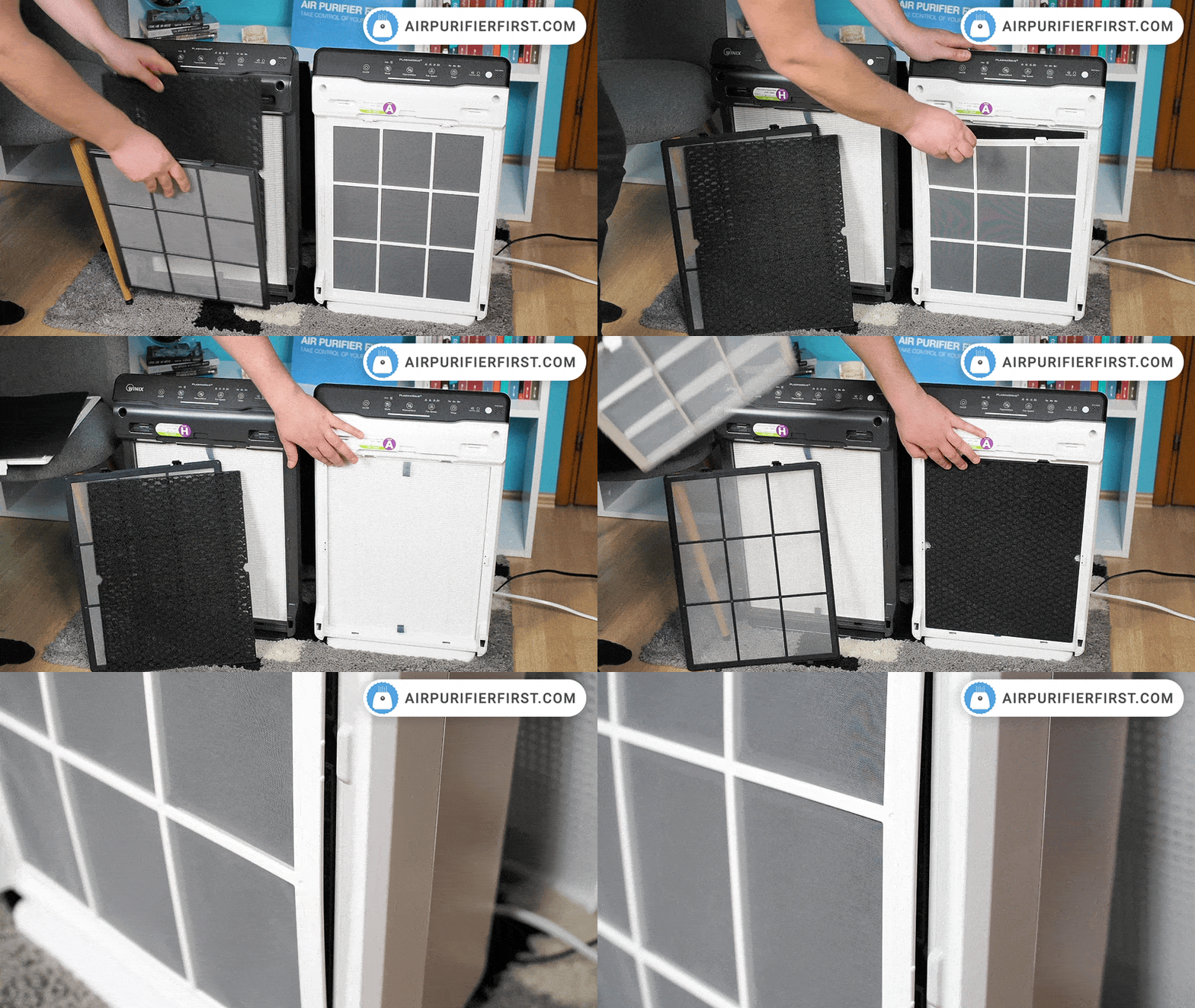
It is important to note that the activated carbon filter on the Winix 5500-2 is washable. The True HEPA filter on both air purifiers is identical, without any difference. In my opinion, for most users, the difference in the carbon filter is not crucial.
How to replace filters on these air purifiers?
With both devices, the filter is changed on average every 12 months.
The big difference is that the Winix 5500-2 uses a washable carbon filter. In contrast, the Winix C535 uses a carbon filter that needs to be changed on average every 4 months.
Both devices come with a filter set sufficient for a smooth operation of 12 months.
Noise Test
I really like the diverse choice of speeds, which leads to the fact that almost every user will be able to adapt to some of the working modes.
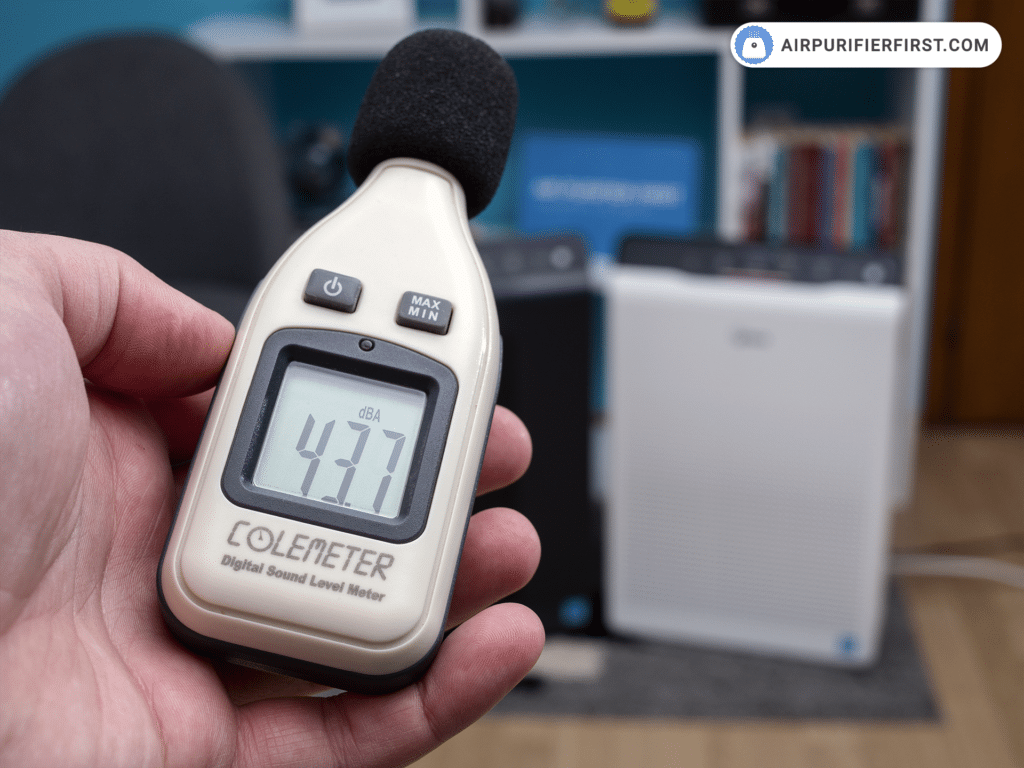
Besides, a big plus is the sleep mode that both devices have, which will further reduce the fan speed, so in this mode, the devices will be almost silent.
| Product | Noise Range (dBA) |
|---|---|
| Winix 5500-2 | 40.6 – 66.4 dBA |
| Winix C535 | 40.8 – 63.2 dBA |
Overall, I don’t have much to complain about the operation of the motor. The only thing I don’t like is the big difference in volume between Fan Speed 3 and Fan Speed 4. You can see the motor volume range in the table below.
Performance Tests
The most significant difference when we look at these two devices is in their performance. Especially when it comes to odors. The main reason for this is the slightly higher quality carbon filter in the Winix 5500-2 model.
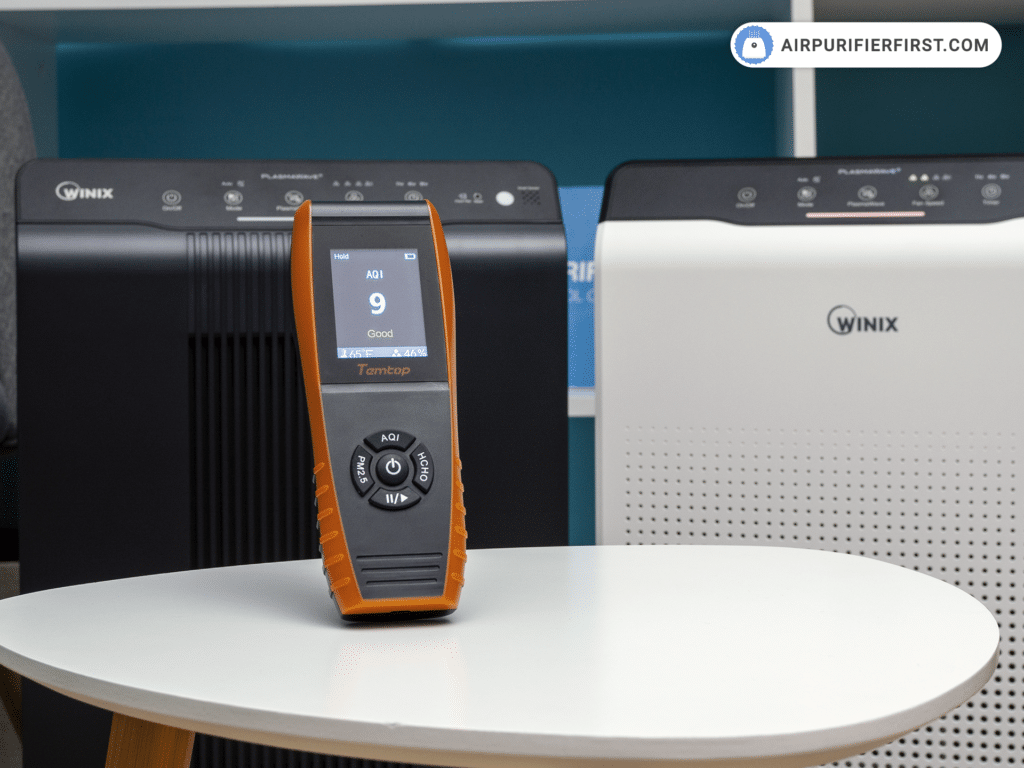
Winix 5500-2 is designed for rooms up to 360 sq. ft., the same as the Winix C535. That is why I tested the devices in identical rooms and in similar conditions. You can see the most exciting tests below.
320 sq. ft. Room Tests
I tested both devices in a room of 320 sq. ft. The Winix 5500-2 improved the air quality by about 96% in 60 minutes working on Turbo Mode, thus lowering the AQI from 141 to 5.
The Winix C535 also did great. In the same room, it lowered the AQI from 107 to 5, thus improving air quality by about 95%.
320 sq. ft. Room
* Data measuring time is 60 minutes.
Both devices made excellent results in this room. Something like this was expected from air purifiers of this quality.
320 sq. ft. Room Tests – Auto Mode
In the other room, which is the same size as the previous one, we tested the devices, but they worked on auto mode this time.
The Winix 5500-2 improved the air quality by about 93% in 60 minutes working on auto mode, which is an excellent result, considering that the sensor in this device only detects odors.
I tested the Winix C535 in the same room in auto mode. In 60 minutes of operation, the device lowered the AQI from 86 to 9, thus improving air quality by about 90%.
320 sq. ft. Room
* Data measuring time is 60 minutes.
Operating Costs
Both devices are powered by an identical 70W motor. Both devices have similar electricity consumption. This means that if we use either of these two devices at maximum speed for a month, 24 hours a day, it will consume about $ 5 of electricity.
Given the capabilities and characteristics of these two devices, power consumption is not very high. However, the cost of replacement filters is slightly higher and represents higher cost.
| Product | Wattage Range (W) |
|---|---|
| Winix 5500-2 | 1.2 – 57.9W |
| Winix C535 | 1.2 – 54.1W |
The price of replacement filters is identical for both products. However, the Winix 5500-2 has a slight advantage because there are many manufacturers of replacement filters available for this model on the market, which is not the original filter but is much cheaper.
Which One Does it Better?
Basically, these are two devices with different colors, different filters placed in a completely identical housing.
Both devices feature brilliant performance, high efficiency in air purification, a multitude of advanced options, and the trust of many users.
Although this is a bit of constant comparison, without any real bidding, I still have a product that is a favorite and that I think is a better choice to buy. Identical features, the price of replacement filters, volume, motor performance are just some of the features that make it challenging to choose a winner. However, due to slightly better performance, more efficient carbon filters, and a larger selection of replacement filters from other manufacturers, the winner in this comparison is the Winix 5500-2, which is also my absolute purchase recommendation.
Although, if you opt for the C535, you won’t make a mistake, essentially both devices are very high-quality air purifiers, and both devices will do the job at a top-level.
Excellent article! Well researched and documented. We’ve had our Winix 5500-2 from before Covid. Very pleased with it as the only filter that needs replacing is the Hepa filter once as year as the other two are washable. Very very pleased with our Winix 5500-2! It definitely helped to protect us through Covid up to today!!!
Your analysis appears to conflict regarding the stages of purification. The winix website states the 535 is a 3 stage while the 5500 is a 4 stage stage filter system.
Is there another filter?
1 pre filter
2 carbon filter
3 hepa filter
4 plasma ionizer
These are on both machines. I still don’t see a difference except for marketing.
Thanks
Hi Tom, they both use a four-stage filtration technology. You are correct! The stages are: Pre-filter, Carbon Filter, True HEPA filter, and PlasmaWave. The most significant difference is in their carbon filters; the 5500-2 uses a pellet-based one, while the C535 uses a fibrous filter coated with carbon.
I just purchased the C535 at Walmart. I was planning to get the 5500-2 online but I was heading to an overnight visit where I feared asbestos might be present and decided to take the risk on this model. It was very gratifying to learn that it is basically the same, especially since I didn’t buy it for odors. One advantage of the c535 where I got it – it comes with a second hepa filter (and 2 years’ replacement carbon filters).
Thank you for this great comparison article! Very well written and researched.
As an owner of the 535 for many years, and 24-hr-a-day user during wildfire smoke time of year, I have to say I am very satisfied with my c535 air purifiers. I also have to say that I was able to fit the carbon filter with the little balls in it into my 535s–albeit sitting directly behind the outside door. I do think it makes a big difference, and when I clean it with my vacuum hose, there is a lot of yucky stuff (technical terminology) to clean. It takes a little bit of patience to balance the large carbon filter inside the door, but once done, it is worth it.
Thanks for sharing your valuable hearing experience.
Thanks for the quick reply
Hello it was very nice your presentation but I have to ask something can I use the active carbon filter off 5500-2 To the other model wining zero ?
Hello, a few minutes ago, I have tried if the Winix 5500-2 filter can fit into the Winix C535, and the answer is no, the Winix 5500-2 filter can’t fit into the Winix C535! The reason is that the filter in the 5500-2 is thicker than the C535 filter.
This comment applies to your Winix 5500-2 and Winix C535 Comparison Test.
Your review and remarks on the Winix 5500-2 was excellent.
As an owner of a C535 for 3 years, I find the C535 to be a very fine air purifier, yet I agree with you that the 5500-2 is better.