

Blueair, a premium air purifier company, has been at the forefront of its industry for years. This status has been particularly evident in recent years, during which they have launched numerous innovative models. Originating from Sweden, this global brand’s products can be purchased in almost any part of the world.
A lot has changed since Blueair was bought by Unilever, but what I find most interesting are the changes in design, the innovations, the improvements to the Blue Pure range, and some new products, most of which I like the Blue Pure Fan and the HealthProtect air purifiers.
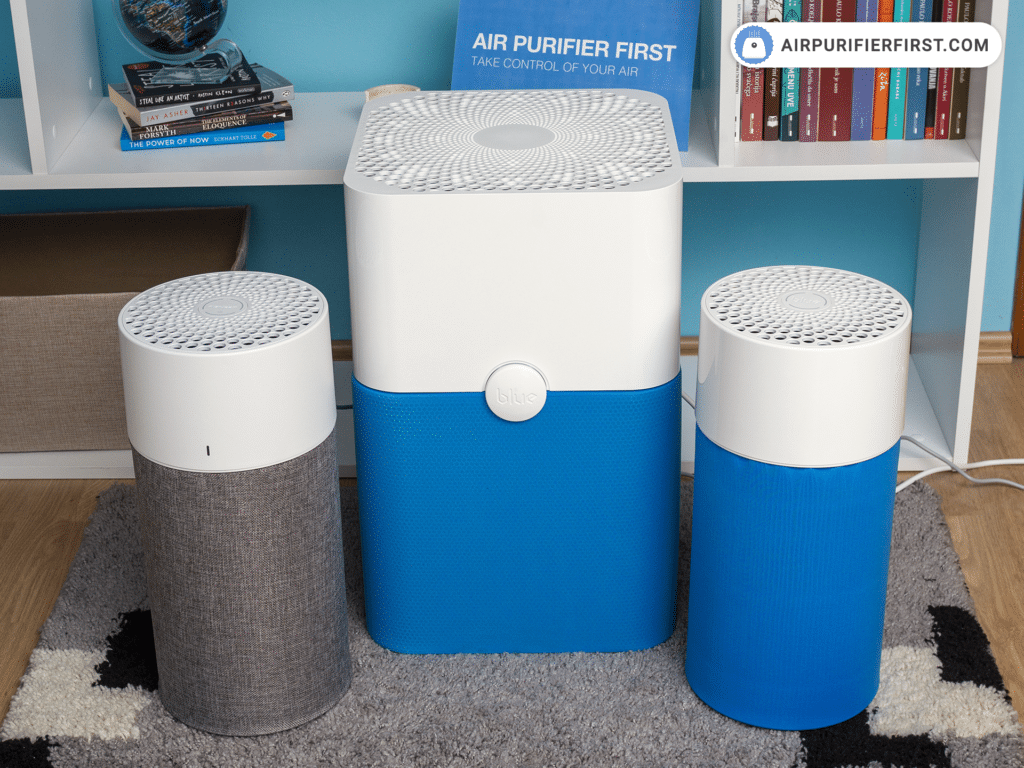
Table of Contents
This buying guide presents the five best Blueair air purifiers available for purchase. I have selected these air purifiers based on a comparison of several factors, including price, performance, filters, maintenance, and power consumption. Blueair offers an excellent selection of air purifiers, primarily characterized by their high quality and outstanding performance.
What do all Blueair air purifiers have in common, are they really as good as they seem, and which Blueair air purifier is best for you? I’ll answer these and many other questions below, so sit back and read on.
In a Hurry? Here’s a Summary of The Best Blueair Air Purifiers!
- Blueair 211+ – It is a medium-sized air purifier designed for rooms up to 540 sq. ft. It’s very quiet at first and second speed and uses quality filters. I recommend it for living rooms, bedrooms, offices and similar spaces.
- Blueair 411 Auto – This is a small air purifier characterized by a washable pre-filter, air quality sensor, and minimalism. It is designed for small spaces up to 190 sq. ft. It fits easily into a small bedroom, office, small living room, children’s room, or similar.
- Blueair Pure Fan Auto – It combines an air purifier and fan that cools the room. It is designed for rooms up to 326 sq. ft. Due to its specific design, this innovative air purifier fits into almost any environment.
- Blueair HealthProtect 7470i – One of Blueair’s best air purifiers ever, it covers rooms up to 418 sq. ft. It uses advanced filtration technology, has one of the highest quality carbon filters, and is highly efficient at cleaning the air.
- Blueair Classic 605 – This is the largest air purifier on the list, covering spaces up to 775 sq. ft. It ideally fits into a large living room, a large bedroom, or even an open space room.
*If you click any of these links and make a purchase, we earn a commission at no additional cost to you.
Top 5 Best Blueair Air Purifiers
It is really hard to pick only five air purifiers from so many decent models. But no matter how similar Blueair air purifiers are, I have chosen the best from the best.
Below you can find the top five air purifiers that I think are best from Blueair. If you pick any of the suggested air purifiers, I am sure you will not go wrong. But please take your time and read each section carefully because some of them may fit better than others for your personal needs.
Blueair 211+ – The Best Mid-Sized Air Purifier
Blueair 211+ Highlights
- The Blueair 211+ is designed for spaces up to 540 sq. ft. Blueair cleans the air 4.8 times in one hour in a room this size.
- This air purifier uses a washable pre-filter, particle filter, carbon filter, and HEPASilent technology for filtration.
- The Blueair 211+ needs little energy to work and uses a 61W motor.
- This air purifier comes with a 2-year warranty.
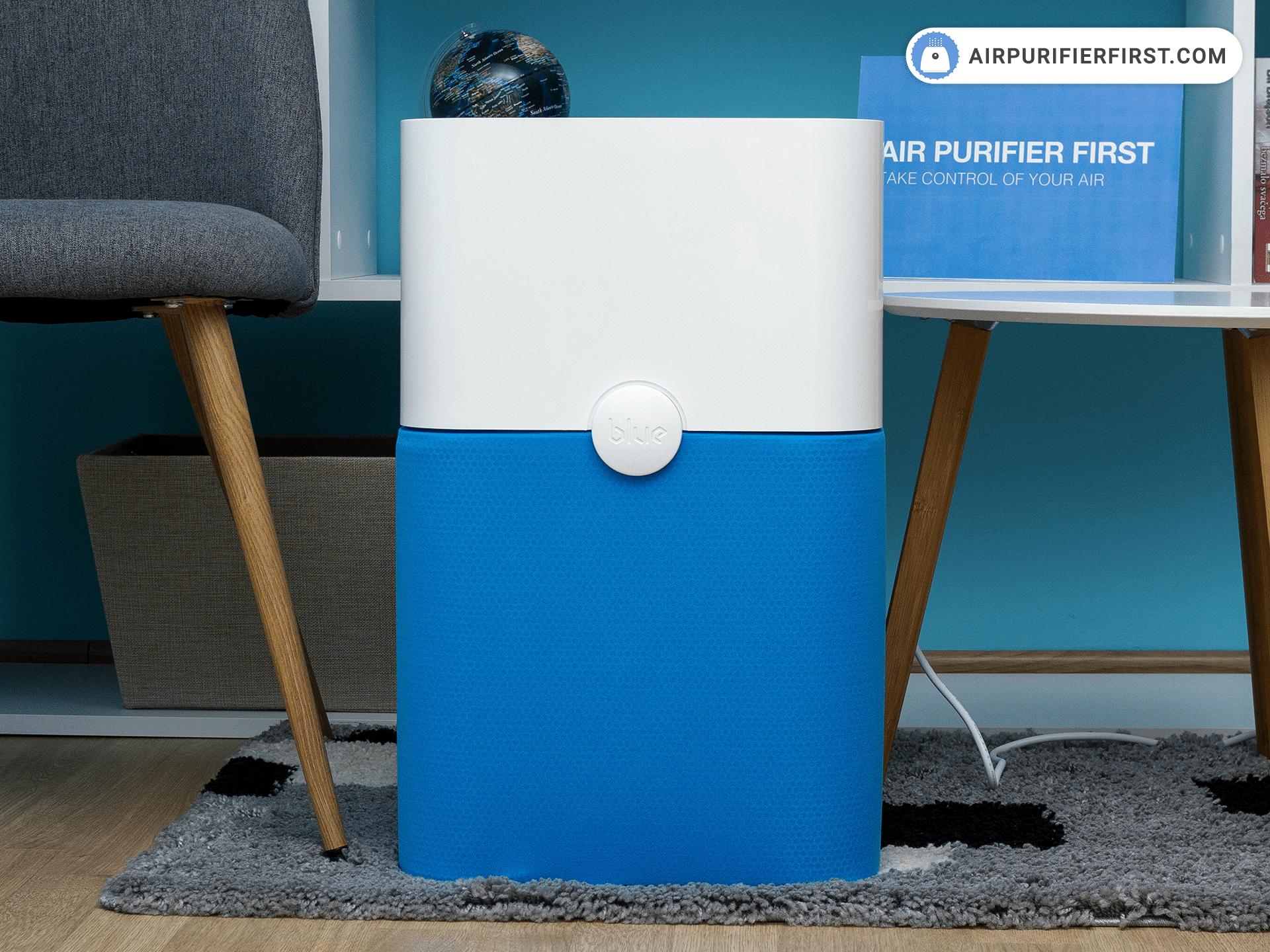
The Blueair 211+ is definitely my top choice and highest recommendation if you are looking for a medium-sized air purifier that efficiently cleans the air in rooms up to 540 sq. ft. This is the minimalistic air purifier that characterizes the Blue Pure series.
It consists of two parts, the top part is plastic, there is a motor, and there is a control knob on the front. The lower part is metal, to which the pre-filter is attached and in which the filters are located. This model does not have any fancy options. Because of that, it is ideal for people who want a simple minimalist air purifier that will do its job without too much hassle.
The Blueair 211+ uses a three-stage filtration system consisting of a washable pre-filter, a particle filter, and an activated carbon filter. In addition, this air purifier uses HEPASilent technology, which is implemented as the fourth stage of filtration. Essentially, it is an ionizer that cannot be switched off, but fortunately, this air purifier is CARB certified, which means that it does not produce illegal amounts of ozone and is entirely safe to use. With all the filtration stages, you can be sure that the air will be cleaned.
The Blueair 211+ needs little energy to operate (up to 61W), but nowhere near as little as the Blueair 411 Auto, which uses a motor of only 10W. Still, your electricity bill will not go significantly up. Basically, you won’t even notice it even if you run the air purifier all the time.
The 211+ is easy to use and is very quiet when running at first and second speed. At first speed, this air purifier makes a sound of only 43.9 dBA.
In fact, the Blueair 211+ is the air purifier I would recommend for a living room, large bedroom, kitchen, large office, or any similar room.
| Filters | Fabric Pre-filter, Particle Filter, and Carbon Filter |
| Filter Longevity | about 6 months |
| Coverage (4.8 ACH) | 540 sq. ft. |
| Power Consumption | 61W |
| Warranty | 2-year |
| In-depth Review | Blueair 211+ Review |
Blueair 411 Auto – The Best for Small Rooms
Blueair 411 Auto Highlights
- The Blueair 411 Auto is a small air purifier designed for spaces up to 190 sq. ft.
- This air purifier uses a 3-stage filtration system consisting of a pre-filter, a particle filter, and a carbon filter. In addition, this air purifier uses HEPASilent technology as the fourth stage of filtration.
- The Blueair 411 Auto needs very little energy and uses a motor of only 10W. It is Energy Star certified.
- This air purifier and the other models in the Blue Pure range come with a 2-year warranty.
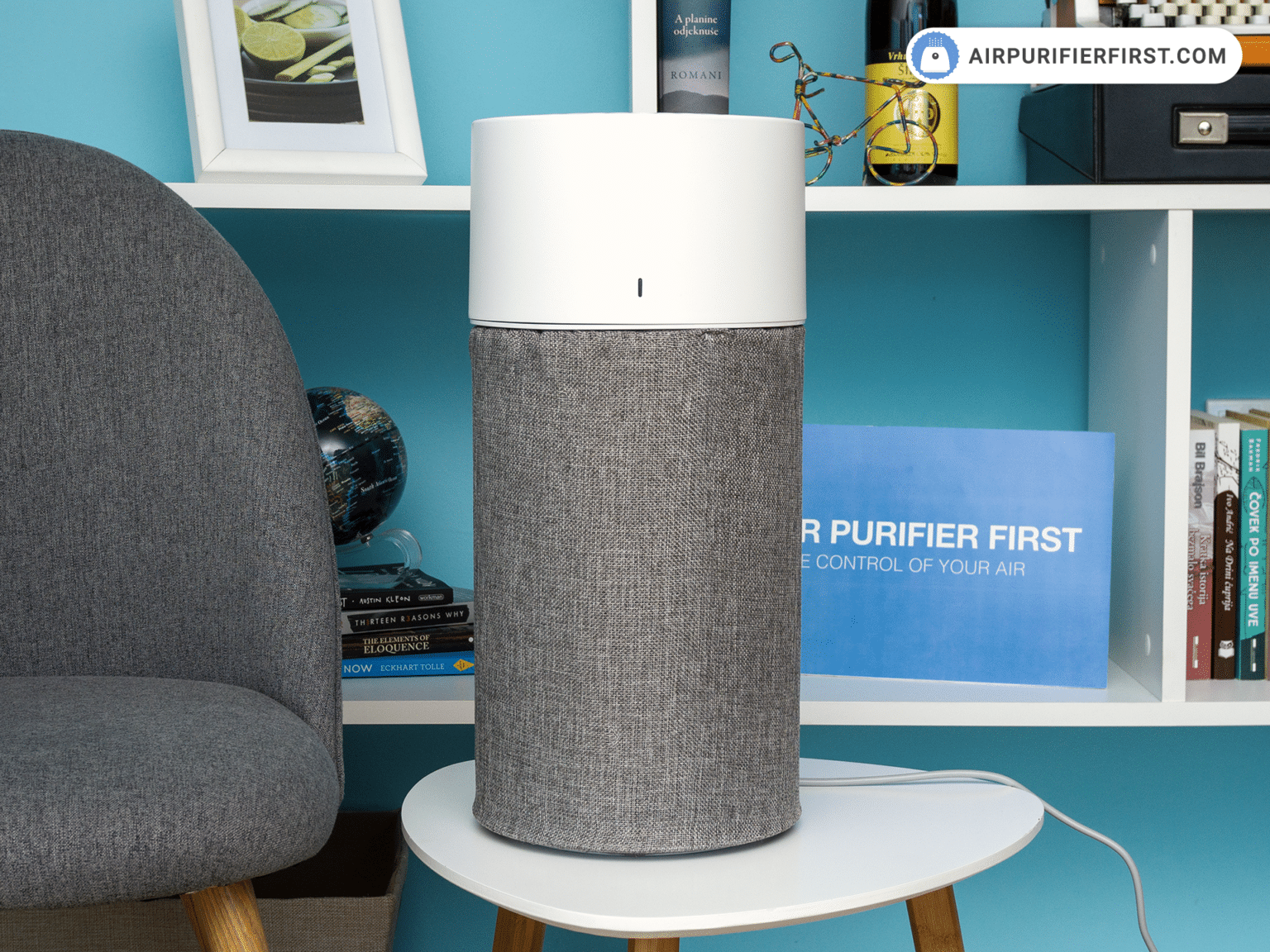
The Blueair 411 Auto is another model from the Blue Pure range on the list. It is much smaller than the 211+ model mentioned above, making it ideal for smaller rooms such as a small office, small bedroom, children’s room, etc. This air purifier covers rooms up to 190 sq. ft. This air purifier cleans the air 4.8 times per hour in a room of this size.
The Blueair 411 Auto uses a washable pre-filter, available in 5 different colors, as the first stage of filtration. With five different colors, you can choose the one that fits your environment. The pre-filter on this model is characterized by being made of a higher quality fabric than the pre-filter on the Blueair 211+. The second stage of filtration is a particle filter. The third stage is a carbon-coated fiber filter. The final stage is HEPASilent technology. This Blueair is also CARB certified, which means it does not produce illegal amounts of ozone and is safe to use. I really like this model because it is very easy to use. In addition to its minimalist appearance, it has advanced options such as a sensor and an air quality indicator.
I definitely recommend this little air purifier, especially for smaller spaces like a small living room, bedroom, etc. Maintenance costs for this little fellow are minimal. Believe it or not, this air purifier needs only 10W to operate at maximum capacity. In other words, your electricity bill will not know that you are running an air purifier 24/7.
| Filters | Washable Pre-filter, Particle Filter, and Carbon Filter |
| Filter Longevity | about 6 months |
| Coverage (4.8 ACH) | 190 sq. ft. |
| Power Consumption | 10W |
| Warranty | 2-year |
| In-depth Review | Blueair 411 Auto Review |
Blueair Pure Fan Auto – Best Stylish
Blueair Pure Fan Auto Highlights
- The Blueair Blue Pure Fan Auto is a medium-sized air purifier that will easily clean the air in rooms up to 326 sq. ft.
- This air purifier uses 2-stage filtration technology with the addition of HEPASilent technology without a carbon filter.
- It needs very little energy to operate, especially considering the airflow it has. It uses a motor that needs only 44W and is Energy Star certified.
- Blue Pure Fan Auto comes with a 2-year warranty.
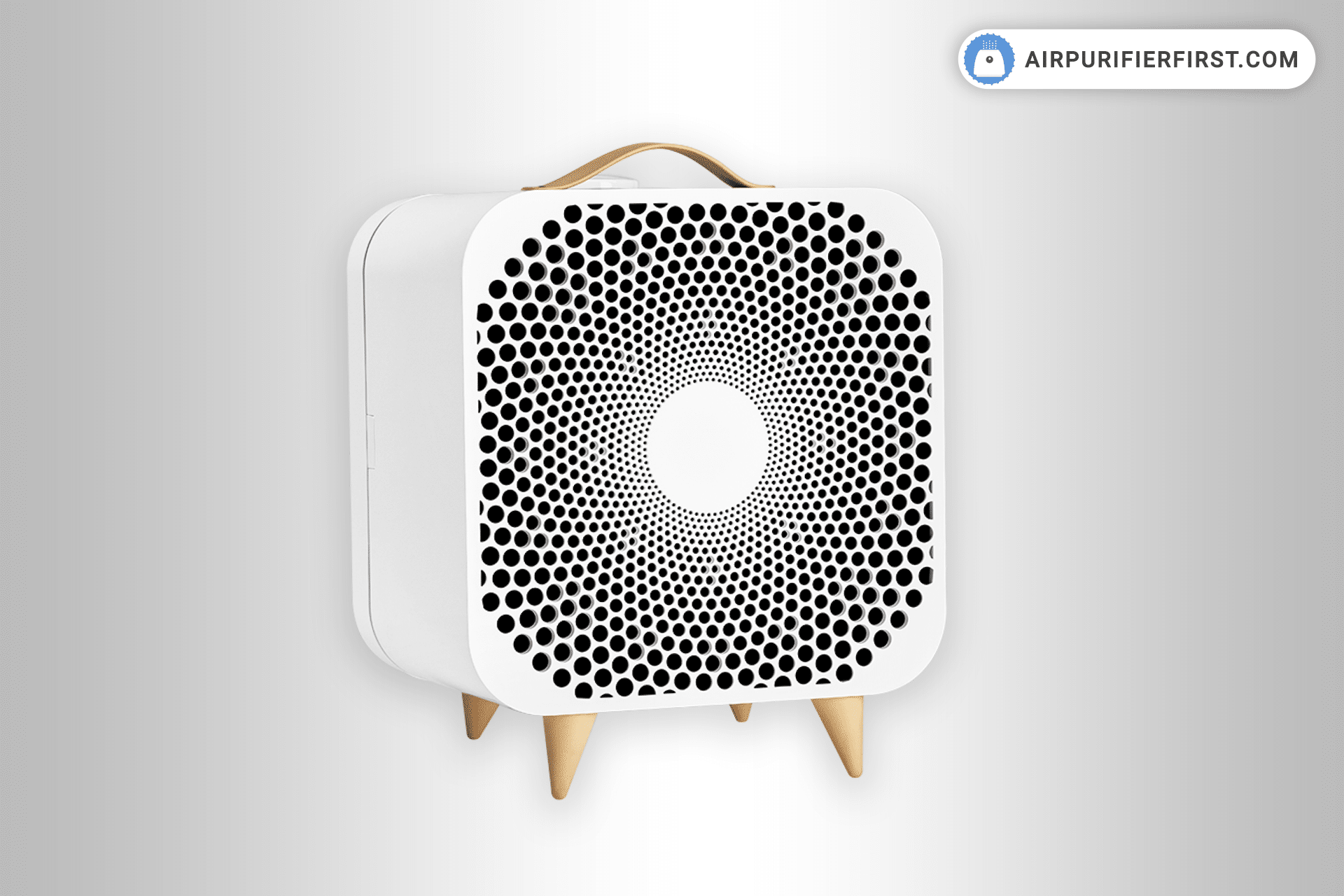
The Blueair Pure Fan Auto is a slightly newer air purifier with a unique design and unusual construction. However, it also has some similarities with the previous two models. This air purifier is best used in rooms up to 326 sq. ft. It is characterized by the fact that it serves as both an air purifier and a room cooler (something like a fan). This means that this model is perfect for the hot summer period. It will clean the air and cool the room on hot summer nights.
The Pure Fan Auto is a minimalist air purifier that doesn’t have many advanced options. Still, it does have an air quality sensor, an air quality indicator, and an auto mode.
The air quality indicator is located on the front. It lights up in three different colors depending on the current air quality. This feature makes this model a bit more advanced compared to other previously mentioned models. However, this is a medium-sized air purifier with some filtration deficits that you should be aware of.
My complaint about filtration is that this model does not have a carbon filter. This means that it uses a washable pre-filter, available in 5 different colors, as the first stage of filtration and a particle filter as the second stage of filtration. In addition, this air purifier has HEPASilent technology, which cannot be switched off, but is CARB certified, which means that it does not produce unauthorized amounts of ozone. Blueair claims that Pure Fan Auto removes 99% of dust and pollen.
What attracted me most was the aesthetics of this model because it is so unique and looks so lovely that you will be able to fit it into almost any environment without any problems. Due to the lack of a carbon filter, I would not recommend it in the kitchen, smoking room, or any room with similar conditions. But it captures dust and pollen very well.
| Filters | Washable Pre-filter and Particle Filter |
| Filter Longevity | about 6 months |
| Coverage (4.8 ACH) | 326 sq. ft. |
| Power Consumption | 44W |
| Warranty | 2-year |
Blueair HealthProtect 7470i – Best Overall
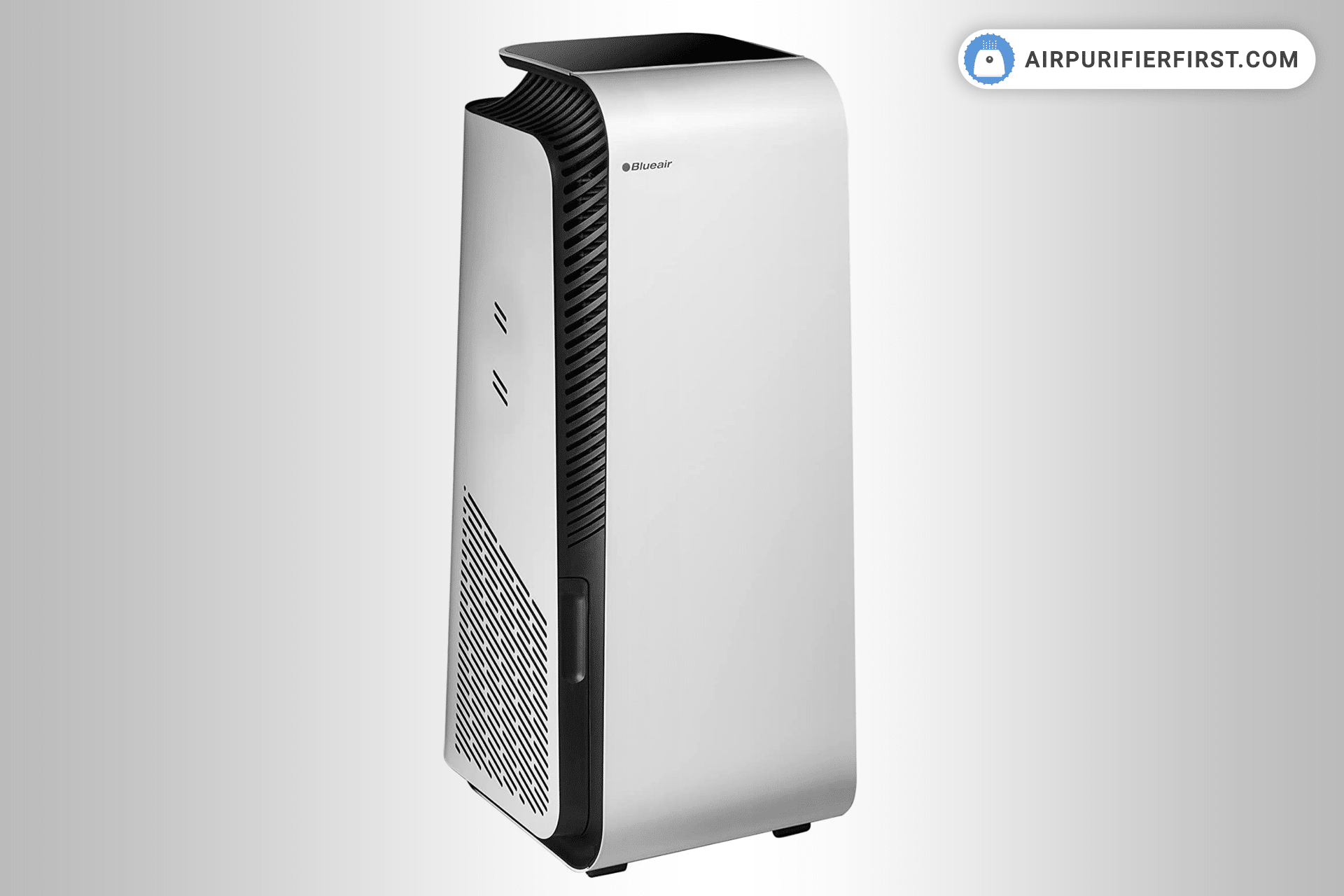
Blueair HealthProtect 7470i Highlights
- The Blueair HealthProtect 7470i uses 2-stage filtration technology, comprising a particle filter and activated carbon filters. In addition, an additional filtration stage of HEPASilent Ultra technology is available.
- This air purifier has 360-degree air slots arranged on all sides, uses a premium LCD display, and can be connected to the Blueair smart app.
- The HealthProtect 7470i uses a motor of only 48W, which is highly commendable for such a big device.
- Blueair provides a 5-year warranty on this model.
The Blueair HealthProtect 7470i is one of the best Blueair air purifiers. It is a top-quality device, which is also reflected in the price. The Protect is a new series that currently offers two devices.
The HealthProtect 7470i air purifier covers rooms up to 418 sq. ft. It is equipped with many innovative options, and it can be connected to a smart app. I find it quite amazing that such a powerful air purifier has a motor of only 48W. This means that the engineers have really validated this model and that the HealthProtect 7470i is classified as a premium model for a reason. Note that this is a slightly heavier air purifier, about 27.6 lb, but fortunately, it has wheels that make it easier to move from room to room.
The HealthProtect 7470i has an air quality sensor, an air quality indicator, and an auto mode. In addition, this air purifier has 5 different working modes, speed 1, speed 2, seed 3, auto, and night mode. Besides the air quality sensor, my favorite feature on this device is the Blueair app, which opens up many new and additional possibilities when connected to the device. For example, you get the option to set an on/off timer, set voice control via Amazon Alexa and Google Assistant, and set options such as a child lock, night mode schedule, and LED brightness. This model has fancy advanced options that can be used with a smart app. If you like to play with smart devices and set them up for your needs, this is the right air purifier for you.
The HealthProtect 7470i air purifier is also CARB-certified. It uses HEPASilent Ultra technology, Bleuair’s exclusive filtration technology. Pioneered by Blueair, this dual filtration technology combines electrostatic particle charging and mechanical filtration with a unique filter design. It also uses a particle filter that removes particles such as pollen, dust, pet dander, mold spores, etc. An activated carbon filter also adsorbs gasses, VOCs, chemicals, and odors. Filters last an average of 12 months. This is the ideal air purifier for larger rooms such as large living rooms, large bedrooms, kitchens, and similar rooms within the recommended dimensions.
| Filters | Particle Filter and Carbon Filter |
| Filter Longevity | up to 12 months |
| Coverage (4.8 ACH) | 418 sq. ft. |
| Power Consumption | 48W |
| Warranty | 5-year |
Blueair Classic 605 – Best for Large Rooms
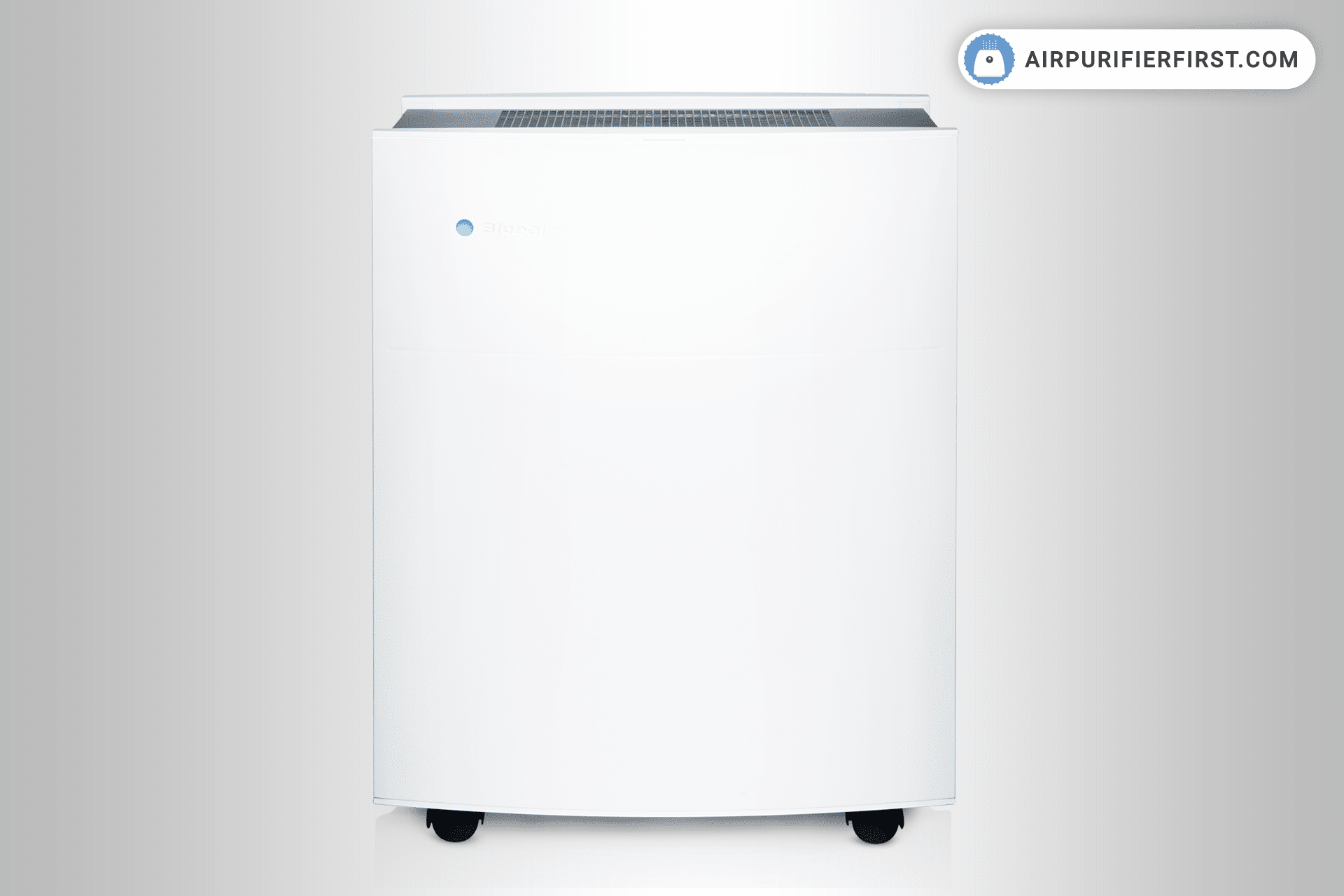
Blueair Classic 605 Highlights
- The Blueair Classic 605 covers rooms up to 775 sq. ft. and cleans the air in a room of these dimensions 4.8 times in one hour.
- This air purifier uses a particle filter in combination with HEPASilent technology.
- It has a 100W motor, slightly more powerful than the other devices on the list. This motor power is somewhat justified given the large airflow that the device has.
- Blueair also gives a 5-year warranty on this model.
The Blueair Classic 605 is definitely the largest model on the list, thus covering the largest rooms, up to 775 sq. ft. Because it is very bulky, the fact that it has wheels makes it much easier to move from room to room.
I don’t like that the Blueair Classic 605 doesn’t have an air quality sensor, which is a disadvantage considering the price tag that has to be paid for this model. However, you can connect it to the Blueair Aware air quality sensor and make it work as if it had an air quality sensor. This is one of Blueair’s highest-quality air purifiers. The durable, galvanized steel housing will last forever. It uses a particle filter combined with HEPASilent technology. It is CARB certified, which means it doesn’t produce unauthorized amounts of ozone.
Classic 605 can be connected to the Blueair smart app. Connecting the device to the smart app opens up additional options such as voice control, an on/off timer, and other advanced features. The Blueair Classic 605 has only three control buttons, a WiFi button, a filter reset indicator, and fan speed buttons. I would recommend this device for large rooms, but in non-smoking rooms and where the primary objective is not to neutralize strong odors such as cigarette smoke and the like.
You need to understand that this is a large air purifier, and because of that, it has a large motor that needs 100W. But in return, you will get high airflow and an air purifier that is very efficient in cleaning large rooms.
| Filters | Particle Filter |
| Filter Longevity | about 6 months |
| Coverage (4.8 ACH) | 775 sq. ft. |
| Power Consumption | 100W |
| Warranty | 5-year |
What Makes Blueair Air Purifiers Stand Out
To be honest, Blueair is one of my favorite air purifier manufacturers. I like their simplicity, the range of different products, the quality of their workmanship, but also their extremely high efficiency.
Blueair series: Blueair offers several different air purifier models: Blue, DustMagnet, Classic, Protect, and Pro. Each series has its own features that distinguish it from the others. Each series is priced differently, so the Blue series has the best value, and the Pro series is the most expensive.
Globally available: What I like about Blueair is that they are spread all over the world, they have great support, and are actively engaged in innovation, so every now and then, they launch a new innovative air purifier that raises standards and expectations in the market.
The Blueair app: Remote control, voice control, and screen lock are just some options available when connected to the smart app. This app is available for Android and iOS devices.
Washable pre-filters: I can’t help but mention the unique washable filters available in the Blueair Blue Pure range, which give Blueair a whole new twist and allow you to fit the device into almost any environment. I think Blueair has made a name for itself with this series, mainly thanks to its innovative pre-filters.
Energy consumption: Blueair air purifiers consume very little electricity, except for some of the older models in the Classic series. Blue Pure models such as the 411 and 411 Auto only consume 10W, which is among some of the lowest power-consuming air purifiers in the air purifier market. The slightly weaker motors don’t affect performance, of course, as Blueair engineers have optimized power consumption and efficiency in the best possible way. Of course, all Blueair machines are Energy Star rated.
Innovative filtration technology: These air purifiers have many filtration technologies, all using HEPASilent technology, which is essentially an ionizer. Blueair air purifiers are CARB certified, which means they do not produce illegal amounts of ozone. In addition, some of the more expensive models, such as the HealthProtect 7470i, include DualProtection filters, which contain particle filters and sustainably sourced coconut carbon that remove pollutants from the air four times faster than competing carbon filters. In addition, these filters reduce noise, so devices with DualProtect filters are slightly quieter.
Warranty: The warranty for Blueair devices depends on the series, so the Blue series has a minimum warranty of 2 years. However, devices from other series come with a warranty of as much as 5 years, which is very generous and commendable for these devices.
Room coverage: thanks to the variety of devices offered by Blueair, you will easily find a machine to fit almost any room. If you are looking for a device for small spaces up to 200 sq. ft., you can choose the Blueair 411 Auto. If you are still looking for a device for medium-sized rooms, up to 600 sq. ft., your best choice would be the Blueair 211+ or the Blueair HealthProtect 7470i. But if you are looking for devices for much larger spaces, then there is the Blueair Classic 605.
FAQ on Best Blueair Air Purifiers
Does Blueair use True HEPA filters?
Unfortunately, Blueair air purifiers do not use a True HEPA filter.
Do Blueair air purifiers produce ozone?
Yes, the products do. All Blueair air purifiers use HEPASilent technology, essentially an ionizer. But, they are CARB certified, which means they produce ozone in the allowed amounts. In addition, the devices are verified ozone-free (<5 ppb) by the Intertek Sustainability Program.
How long do the filters on Blueair air purifiers last?
It all depends on the model; the average filter life on a Blueair is about 6 months. However, filters on some larger models, such as the Protect series, last 12 months.
What is HEPASilent technology?
It is basically an ionizer that is mostly always active when the air purifier is on and cannot be switched off. Ionizing air works by releasing negative ions that stick to the dust particles, making them heavier and allowing the device to collect them more easily.
Will Blueair products protect against allergens?
Blueair air purifiers use particle filters combined with HEPASilent technology, which can capture small particles in the air. This includes typical allergens that can cause symptoms like runny nose, cough, etc.
Final Conclusion
Blueair is a serious company that exclusively manufactures air purifiers. As they are entirely focused on the production of air purifiers, this makes them one of the best manufacturers of these devices on the market. I think that Blueair is at the very top in terms of global market coverage. Its great popularity, the wide range of products, and the millions of satisfied users are reason enough not to doubt the seriousness of this company.
When it comes to choosing the best Blueair air purifier, I like the Blue Pure range the most, and I would highlight the Blueair 211+ air purifier. But if your budget allows, I would recommend the Protect series, more specifically, the Blueair HealthProtect 7470i, which is one of the best air purifiers on the market at the moment.
I would also mention that whichever device you choose from the top 5 best Blueair air purifiers, you will not go wrong. All the devices presented are of exceptionally high quality, without a doubt an excellent choice. If you have any questions or uncertainties, please leave a comment in the comments box below, and I will do my best to reply as soon as possible.
Leave a Reply